How Do I Manufacture My Physical Products?

If you want to manufacture a physical product (as opposed to digital products that can be delivered online) there are a few ways you can go about this.

If you’ve written a book, you can print physical copies, and audio and video files can of course become CDs and DVDs.

You can follow those links if they’re what you’re after, but here we’re going to focus on manufacturing other kinds of products; clothing, supplements, household items, electronics, etc.

Manufacturing Your Own Products

Let’s say you want to manufacture your own invention. Or you want to knit your own funky sweaters and sell those. Or you want to sell t-shirts with your designs on them.

Well, you have a few options:

  1. You can make the product yourself and then fulfill orders yourself, or outsource it. Example: knit your own alpaca sweaters. For this, all you need is a good shopping cart, affiliate program and email platform combined into one, like 1ShoppingCart.
  1. You can hire a contract manufacturer, who ships the finished product to your warehouse. You then ship out individual orders to your customers. Example: supplement manufacturing.
  1. You can use an online, automated production and fulfillment house – an online marketplace – where you just host a shop plugin or link with your name or branding on the shop. Your customer actually orders from the online marketplace and they handle product production and fulfillment. Example: FineArtAmerica or CafePress.

Contract Manufacturers

Depending on your industry, or the types of products you want to sell, you will have to do your own research for contract manufacturers.  Keep in mind that when manufacturing your own products, each contract manufacturer will have a ‘minimum run’ order. For example, if you’re manufacturing supplements, then often the smallest run you can order is 1000 units (bottles). Or if you’re manufacturing clothing, the smallest production run is often 100 pieces.

In that case, you may wish to start out by searching for a product you like that you can private label. Private label means that you don’t have to formulate (invent) or manufacture your own product. You can find a manufacturer whose product you already like and they will manufacture it for you, but they will place your labels on the product, instead of their own. With private label, the order minimums are usually much lower than with contract manufacturing.

Here are some sites with products that you can create online and then have delivered to you, that don’t require a large minimum order:

1. Custom stickers, iPod or cellphone skins and cases
stickerapp.com

2. Custom flash drives, CDs
www.infodistributors.com

3. Books, workbooks
www.48hrbooks.com

4. Custom t-shirts, housewares, mugs, etc.
www.CafePress.com

5. Clothing
amarisas-clothing.com
or
jomsyfashion.com
or
sewingworks.eu

6. Electronics
rbbsystems.com
or
www.ocmmanufacturing.com

To find a specific type of product manufacturer, that doesn’t require large production runs, type this into Google:

small order [insert product here] manufacturers

For example:

small order clothing manufacturers

small order electronics manufacturers

Online Marketplace

If you don’t want the hassle of producing and carrying your own inventory in a warehouse, you can have other companies manufacturer and ship for you – using what I call an online marketplace shop. This is where the online store will take your customer’s order, produce the product, ship it out the your customer, and handle returns. You can either link to these online marketplaces, or you can display (embed) a version of their shop on your site.

Here are some online marketplace shops I have found (or that I use on some of my sites), that you can embed into your site – so people don’t have to leave your site to peruse your merchandise, or to place their order. These online marketplaces handle receiving the order and accepting payment, producing it, shipping it out and dealing with any returns. All of these can ship internationally:

1. T-shirts, hoodies, infant onesies, mugs, travel cups, laptop sleeves, aprons, tote bags, etc.
www.printfection.com

Here’s an example of a Printfection store on my kids’ site:

2. Art prints, canvas giclees, frames, iPod and iPhone cases
www.fineartamerica.com

Here’s an example of the Fine Art America shop widget that pastes right into a page on my WordPress-based art site::

3. Books or Workbooks
www.CreateSpace.com

4. T-shirts, stationery, tote bags, mugs, bumper stickers, infant clothes, iPad cases, etc.
www.cafepress.com

Manufacture Your Products & Sell On Other Sites

Now, if you make your own products, but you don’t want to set up your own shopping cart yet, then these are stores you can use to sell your stuff until you’re ready to have your own shop. You have to handle warehousing product, shipping it and handling returns. These shops just showcase your products and take the orders (process payment):

1. Handmade, vintage, jewellery, housewares, food, etc.
www.etsy.com

2. Books only
www.blurb.com

3. Music, jingles, intros, songs
www.AudioJungle.com

4. Anything new or used
hub.shop.ebay.com

5. New stuff – any type of item. New or used books are also accepted.
www.amazon.com
Note: Amazon also has an option where they will warehouse and ship your product.

6. Crafts, t-shirts, mugs, clothing, jewellery, housewares, etc.
www.cafepress.com

7. Original music
www.bandcamp.com

8. In addition to these big sites above, if you’re an artist or craftsperson, then it’s probably a good idea to also have your stuff listed in one or two of these smaller sites as well:
http://www.craftbizblog.com/etsy-26-sites-sell-handmade-crafts-online/

What About Selling Into Other Countries?

As you may know, if you’re selling your products through Amazon.com – anyone, worldwide, can order from Amazon.com. But, Amazon also has country-specific versions of it’s online marketplace in different countries, for example:

UK – Amazon.co.ukfutureDT

CHINA – Amazon.cn
GERMANY – Amazon.de
and so on.

Each of these countries varies in the way products are listed and managed, so if you think your product(s) would be ideal for a certain market, then you can find an agent on Upwork who can research the requirements for you and then manage your account – especially if it’s in a different language to yours!

If you go this route, then also commission your agent to prepare a report for you on which online marketplace they think would be best for your product(s) in their country – as it may not be Amazon! This is what happened to me when I thought I wanted to sell my health products into China using Alibaba.com.

Selling Your Own Skills Online

And since we’re on the topic, here’s a bonus category for you! If you’re a tradesperson, or personal assistant you can list your services here: www.taskrabbit.com

If you’re skilled at anything that can be done online (marketing, website design, graphics, etc.) you can list your services in these reputable marketplaces:

Upwork.com

iFreelance.com

Fiverr.com

Now let’s sketch out your plan for selling physical products from your website. Or maybe this is a task you need to come back to in 6 months or so, after you’ve used digital products to get your revenues up. In that case, make a note to yourself to come back here and click the weblinks for each service, if you’d like to donate the affiliate commissions to charity!


Write out your plan here for selling physical products. Which shop plugins are you going to set up? Which online marketplaces do you want to investigate? Or maybe this is a module you need to come back to in 6 months or so, after you’ve used digital products to get your revenues up. In that case, make a note to yourself to come back here…


Okay, now for those of you who want to sell your own products on your site and fulfill your own orders, head on over to the next unit where we’re going to get into all the details, including which fulfillment companies I use myself.


How Do I Warehouse, Fulfill & Ship My Physical Products?

This is a huge topic because it’s a part of your business that you can endlessly tweak and improve. So it’s important not to get bogged down in details, or overwhelmed – but rather, to focus on a few very simple goals: fulfilling orders, delivering products and keeping your customers happy! So let’s start at the beginning…

List Your Product For Sale On Your Site

When you are selling physical products, you want to have a really good photo of the product for sale. And make sure people can see a large size image, if they wish. If you’re selling something like furniture, toys, sculpture, or clothing, make sure you provide photos of the back and sides of the product as well.

Once you have your product image(s), simply follow the instructions provided by your shopping cart to get your product listed in your shop. If you don’t have a shopping cart yet, time to get one!

Here’s how we list a new product for sale on my health site, where we use BigCommerce for our shopping cart. You can follow similar steps with whichever shopping cart you are using:

If you’re not using a shopping cart yet, then you can use a PayPal “Buy Now” button on your webpage to process the sale and use your email platform to communicate with your customer immediately following the sale. PayPal has easy instructions for how to set up a “Buy Now” button on your sales page. Or here’s a short video showing you exactly how to add a PayPal “Buy Now” button to your WordPress page or post:

If you’re not using a shopping cart yet, then you can use a PayPal “Buy Now” button on your webpage to process the sale and use your email platform to communicate with your customer immediately following the sale. PayPal has easy instructions for how to set up a “Buy Now” button on your sales page. Or here’s a short video showing you exactly how to add a PayPal “Buy Now” button to your WordPress page or post:

Note: Remember when pasting code to your site, paste it in TEXT mode, not Visual mode. See the WordPress How-To videos if you have any difficulties.

Here’s a tip for you: When you’re creating a sales page with your PayPal ‘Buy Now’ links, try to make the page visually appealing with photos (or even video), not just text. And always have a good photo of what your product looks like – this is very important!

Large or uncompressed photos slow down your page load time (time it takes to appear in the browser window), so always check your page load time (clear your cache and reload the page as if you were a new visitor) to keep your site fast – no more than 2 seconds maximum load time.

Another option, as I’ve mentioned before, is using an eCommerce site like Bandcamp, Etsy, eBay or Amazon to process your physical products, depending on what kind of stuff you’re offering. Each site has its specifics, including the niche it serves, the way it processes orders, the price to you as a user, and so on, so you’ll have to do some research to find the site that works for you, if you choose to go this path.

Remember that selling this way usually requires your customer to already have or sign up for an account with that particular site – which could be a sales deterrent if you’re marketing to people outside of that community. So if you go this route, make sure you also have your product for sale on your site, either in a shopping cart or using a PayPal “Buy Now” button.

Get That Product To Your Customer

Getting products to your customer is called order fulfillment – you are fulfilling their order. Order fulfillment is broken down into these processes:

  • Warehousing physical products – clean, temperature-controlled, insured
  • Receiving orders, packing product into boxes, labeling – correct packaging size and type, biodegradable.
  • Shipping orders – UPS or FedEx courier services, or local postal service – how fast does the person want the order, can you offer any volume discounts?
  • Accepting returns, processing returned stock, issuing refunds
  • Customer service – any inquiries at any point in the above processes.

There are two ways you can handle order fulfillment: You can do it all yourself, or you can sub-contract out everything but the customer service and credit card refunds. Ian (who has handled all orders, shipping, fulfillment, customer service and more for our Health Shoppe since 1999) and I are going to tell you all about it…

Different Ways To Warehouse and Fulfill Your Products

DOWNLOAD and listen to this audio where I interview Ian Thompson about the different ways to WAREHOUSE and FULFILL physical products. Ian draws on his decades of experience managing our order fulfillment process for over 350 products that we sell in our online health store (36 minutes):

Or click PLAY to listen:

[sc_embed_player fileurl=”http://listentofreedom.s3.amazonaws.com/module15-fulfillment.mp3″]
As I promised on this audio, here are the fulfillment companies we use ourselves, but first, here’s a great overview video from EFS that takes you inside a fulfillment warehouse and shows you exactly what happens:


Note: To just watch the fulfillment process, start watching at 1:30 minutes.

The Fulfillment Companies We Use

Alright, this is one of those times that you can pat yourself on the back for becoming a Freedomite! And saving yourself thousands of dollars worth of time and hassle finding an excellent product fulfillment partner – because we’ve already done that for you! It’s open up our rolodex time again… and here are the fulfillment companies that we have tried-and-tested and used for years:

1. eFulfillment Service (EFS)– can warehouse and fulfill anything; supplements, books, DVDs, electronics, etc.

Here’s a complete list of what they provide.

And you can also take a free test-drive of their service,

2. ProPack – can warehouse and fulfill anything; supplements, books, DVDs, electronics, etc.

Here are the services they provide.

Note: If you are using Infusionsoft, it integrates well with ProPack and Ian has developed an API (application programming interface) for Infusionsoft and BigCommerce – so just email us if you need more details on that. If you don’t understand anything about API’s, don’t worry, you probably don’t need one!

Insider Tips On Shipping Products

Product shipping is another area that is fraught with confusion – especially if you’re really trying to do the best you can for your customer. So let’s tune into Ian Thompson again and he will give you all the tips and tricks we’ve learned from shipping worldwide – to over 60 different countries – since 2000.

DOWNLOAD and listen to this audio where Ian Thompson gives you the full details about the wonderful world of SHIPPING physical goods (11 minutes):

Or click PLAY to listen:

[sc_embed_player fileurl=”http://listentofreedom.s3.amazonaws.com/module15-shipping.mp3″]

Now let’s sketch out your plan for selling and fulfilling (shipping) your own physical products from your website. Or maybe this is a module you need to come back to in 6 months or so, after you’ve used digital products to get your revenues up. In that case, make a note to yourself to come back here and click the weblinks for each service, if you’d like to donate the affiliate commissions to charity!


Write out your plan here for moving forward with selling and fulfilling physical products. Which fulfillment companies are you going to contact? Are there any other components you need to set up? Or maybe this is a module you need to come back to in 6 months or so, after you’ve used digital products to get your revenues up…


If you’ve already been selling your products online, or in a physical retail store for a while, you may get just a little super, crazy excited about our next unit – like I did! So if you’re ready to open up a whole new market for your business and products, come on over and learn step-by-step how to sell your products (or products that you wholesale) into one of the biggest consumer markets in the world – China!


How Do I Sell My Products Into China?

Selling Your Products To Chinese Consumers

Now, for those of you who have already been selling physical products for a while – either from a retail, or online store – I want to tell you about a way to take what you’re already doing and boost it to the next level.

Take a look at this screenshot from Alibaba.com and you’ll see that vendors from different countries are sourcing/manufacturing products from certain countries and then selling into other countries. Like the wheatgrass vendor from the Netherlands, who sourced raw materials from China and is now selling it into the US and also back into China! It’s a completely fluid, wide-open process:

Jack Ma (Ma Yun) is the founder of the $200 billion Internet giant, Alibaba Group. Jack’s story is a good one to kick off this topic because he really embodies the LTYF ethos! Jack failed his university entrance exam three times. He applied to 30 jobs when he was looking for work and was rejected from all of them, including a job at KFC where 24 people applied and they hired everyone but him. He applied to study at Harvard a total of 10 times and was rejected every single time.

When the idea came to Jack to start Alibaba, he gathered 17 of his friends in his apartment and pitched the idea for hours. Only one friend thought it was a good idea. But the next day, he decided to officially start his company anyway. Knowing that those 16 people couldn’t fully see his vision (yet), he trusted in himself that his vision was a solid idea, and he figured it’s better to try and fail, then to never move forward from the idea stage.

He launched his first basic webpage in 1999 at 9:40 am and 3 hours later he’d received 5 emails (he didn’t even know what email was) – people were exclaiming that this was the first website they’d seen from China on the Internet! Now, Alibaba processes 60 million transactions per day.

Be sure to pay attention at 28:40 where Jack outlines how YOUR business could be selling into China with easy access – and why Chinese consumers need you! So even though Alibaba Group (which also includes Tmall and Taobao) is just one of the Chinese E-commerce Platforms we’ll be looking at – everything Jack says holds true for all of us thinking about selling products into China.

Are you inspired, excited? Now let’s go a little deeper into Jack Ma’s goal to support small businesses (your business!) sell their products to Chinese consumers. Again, it doesn’t matter which Chinese e-commerce platform you end up using (Jingdong Group, Amazon, Alibaba Group), the same concepts apply:

Okay, are you ready to explore what and how YOUR business can sell its products into China? I sure was after watching these videos!

But if you’re anything like me, your time is likely already tight and taking a few weeks to research the different Chinese e-commerce platforms, find out how they work, which of your products would be best to list, how the listing process works, setting up your bank account etc. is not something you likely have time for.

Selling Retail or Wholesale To China

Well here we go again, where I am going to give you information right here that is worth the entire price you paid for LTYF! Yep, I’m going to hand over the keys to the kingdom on this one. And we’re going to go deep into each of the six Chinese online marketplaces, whether to sell retail or wholesale, how to set up a Chinese bank account, how to warehouse your products in China, how to handle shipping within China, or to China from your country, everything!

I’m also going to open up my Rolodex and give you the name and contact info for my company’s agent in China. Talk about plug ‘n play! Just keep reading, and it’s all here…

We’re going to go through all the major online marketplaces in China, where foreigners can sell their stuff to Chinese businesses and consumers, the pros and cons of each, along with my Chinese agent’s recommendations – who has over a decade of managerial experience in import/export.

The Top 6 Chinese E-Commerce Platforms

When you’re ready to start thinking about selling your products into China – via an online, e-commerce platform – there are six main options to choose from:

  • Amazon.cn
  • JD.hk
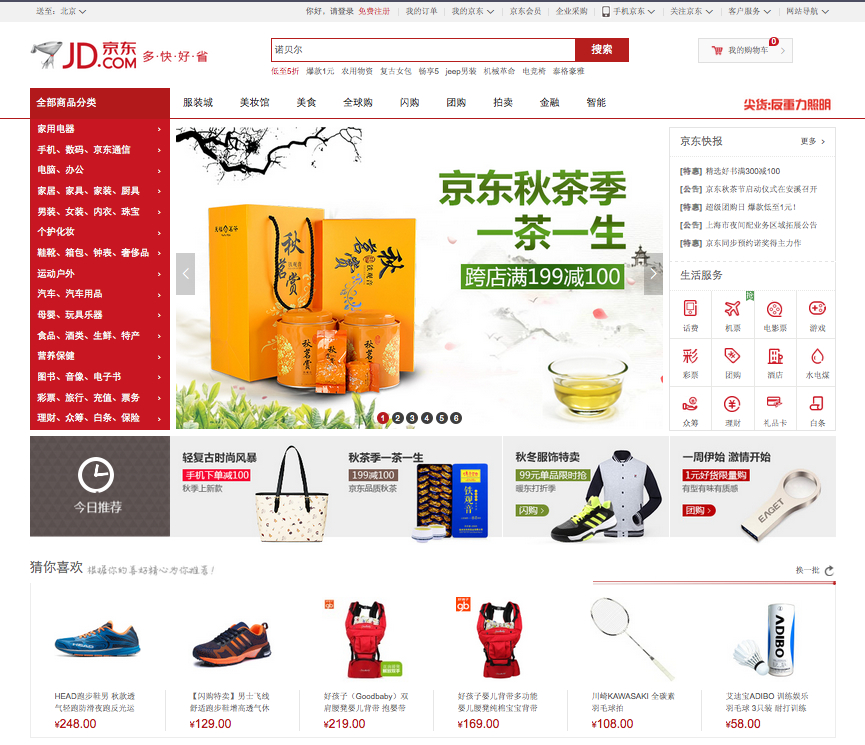
  • JD.com
  • Taobao.com
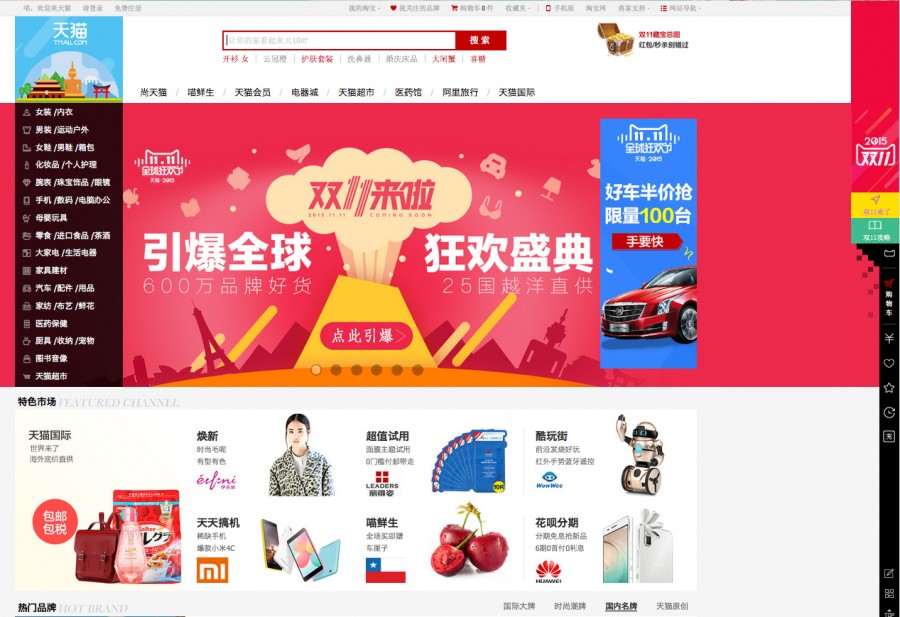
  • Tmall.com
  • Alibaba.cn (also called: 1688.com)

JD.hk and JD.com are both part of the Jingdong Group. There are some important distinctions between the two sites and we will get into those later in detail.

For now, let’s start by understanding the similarities and differences between the 3 different e-commerce platforms that are all part of Alibaba Group: Taobao.com, Tmall.com and Alibaba.cn (known in China as 1688.com). Of course, Alibaba.com is also part of Alibaba Group, but we’re not going to talk too much about it in this unit. Why? Because businesses in China sell on Alibaba.com, but they usually buy on Alibaba.cn

The Similarities

So let’s start by looking at what Taobao, Tmall and Alibaba.cn have in common…

The Same Payment Gateway & Process

Taobao, Tmall and Alibaba.cn all use the same third-party payment platform: Alipay. When purchasing products, customers pay Alipay first, and Alipay holds the funds in escrow, until the customer receives the product(s) and sends confirmation of receipt. Then Alipay will release payment to the seller.

This is the ingenious solution Jack Ma came up with to overcome the biggest objection Chinese consumers have to purchasing online: “How can I trust the seller with my money, how do I know this is not a scam?”

The Same Customer Chat Software

Taobao, Tmall and Alibaba.cn also use the same Instant Messaging (IM chat) software: Aliwangwang; which is also called AliTrademanager (AliTM) or Trademanager (TM). The software is similar to Skype, and can be used to communicate with either buyers or sellers. The most important thing about this IM software is that you can send the chat records to Alibaba Group’s customer service if any trade disputes occur and ask them to resolve the dispute. All communication is in Mandarin, not English.

The Same Keyword Search Function

On all three platforms, buyers are able to search for their desired products using keywords. However, an important distinction is that when buyers search for a product on Taobao, the relevant products from Tmall will also display. But, the reverse is not true and Tmall searches will not display products from Taobao.

Another interesting point to keep in mind is that customers will search by company name, as well as product. So if they know they like your company (maybe they bought something from you last time), they may just enter your company name into the keyword search to see what products you have on offer. Something to keep in mind when setting up your product keyword tags!

The Differences

Now let’s take a look at how each of these Chinese e-commerce platforms differ from one another, as this will help you to narrow down which platform is best for your business to use…

NOTE: Things are going to get detailed and in-depth below, so if you just want the short, to-the-point version, you can skip straight to my China E-Commerce Comparison Chart

Different Business Model

Taobao is mainly a C2C platform (Consumer-To-Consumer, like Ebay), but businesses can still register and sell their products without any negative effect.

Tmall is a B2C platform (Business-To-Consumer, like Amazon), only can be registered as an enterprise user, and must pay an annual fee and deposit before you can start selling products.

Alibaba.cn and Alibaba.com are both B2B platforms (Business-To-Business). The important distinction is that www.alibaba.com is used primarily to sell Chinese products to foreign buyers. Very few Chinese people (or businesses) use it to purchase products from overseas companies.

If you wish to sell your products to Chinese businesses, then you need to list your products on www.alibaba.cn also known as 1688.com

Technically, you can be a business seller, or a personal seller, to register and sell your products on Alibaba.cn. And technically, you do not need to pay any fees to use Alibaba.cn. But, free users are uncompetitive on Alibaba.cn, and no one will see your listings! So both personal users, or business users, need to pay an annual fee plus a deposit to actually be competitive on this e-commerce platform. Realistically though, since Alibaba.cn is a B2B platform, Chinese buyers won’t have much confidence placing a large wholesale order with a seller who is not a proper business.

JD.com is a B2C platform, as is JD.hk and Amazon.cn

Wholesale vs. Retail

Taobao is a retail trading platform and anyone can register as a seller; whether you’re an individual person, or a business.

Tmall is a retail trading platform too, but only businesses can be sellers.

Alibaba is a wholesale trading platform and technically anyone can be a seller; whether you’re an individual person or a business. But of course, personal sellers are not regarded as being as trustworthy or reliable as business sellers.

JD.com is a retail trading platform and anyone can register as a seller; whether you’re an individual person, or a business.

JD.hk is a retail trading platform and anyone can register as a seller; whether you’re an individual person, or a business.

Amazon.cn is a retail trading platform and anyone can register as a seller; whether you’re an individual person, or a business, or a seller on Amazon.us.

*Note: Here’s where we get some of the wiggedy stuff happening: You’ll note that a number of these platforms state that you can be a personal/individual seller, if you like. However, as we go through the registration requirements, you’ll also notice that – except for Taobao – they all require you to have a Foreign (local) or Chinese business license!

Different Consumer Groups

The main consumer group of Taobao, Tmall, JD.com, JD.hk and Amazon.cn is the general public.

The main consumer groups of Alibaba.cn are wholesalers, distributors, dealers, and other businesses.

An interesting thing to keep in mind, is that some of the Taobao and Tmall sellers purchase their products from Alibaba, and then on-sell them to the general public.

Different Suppliers

Sellers on Taobao, JD.com, JD.hk and Amazon.cn source their products from various channels, such as local factories, local wholesalers, Alibaba.cn, and some manufacture their own products.

Sellers on Tmall are usually manufacturing their own products, or private labeling, or licensing products from manufacturers, wholesalers, or Alibaba.cn.

Sellers on Alibaba.cn are usually supplying their own products; they own factories or are the licensors of the product. In most cases, Alibaba sellers are the actual manufacturers.

Different Customer Keyword Search Habits

Obviously, whichever platform you choose to sell your products on, it’s really important to know how buyers are searching for products on that platform – and no, it’s not always the same!

When conducting a product search on Taobao, the buyer usually enters only the keyword descriptors of the product, and they will view multiple examples of that product/item just like they were shopping in the mall. For example, they might type in “waterproof ankle boots woman”

On Tmall, buyers enter keyword descriptors for their desired product, but sometimes they’ll search by entering the seller’s name (brand name) too.

When buyers search on Taoboa, and Alibaba.cn, search results from Tmall will also automatically display (but not vice-versa). So if you can afford to become a seller on Tmall (it has the highest fees), you will gain the widest exposure for your products.

JD.com and JD.hk are both part of the Jingdong Group. When a consumer searches for a product on JD.com, similar products from JD.hk will display and the consumer can select and purchase any of them. However, the reverse is not true; searching on JD.hk will not also pull up products from JD.com.

When a consumer searches for a product on Amazon.cn, similar products from Amazon.us will display, but the consumer cannot directly select and purchase from Amazon.us unless they have a separate user account on Amazon.us When a consumer searches for a product on Amazon.us, similar products from Amazon.cn will not display.

Different Ways to Establish Seller Credibility

As a Taobao, JD.com, JD.hk and Amazon.cn seller, it takes a long time to establish your credibility. It’s a very slow process and you will need to build up a good track record of sales and satisfied buyers.

However, as a Tmall seller, due to the high fees, buyers know that anyone selling on Tmall is a serious business and highly unlikely to jeopardize their deposit by unscrupulous dealings. So credibility and trust issues are non-existent on Tmall.

As an Alibaba.cn seller, it can also take a very long time to establish your credibility, just like Taobao. However, you can choose to pay an annual fee to rapidly improve your credibility rating. In fact, if you do not pay the annual fee, you won’t have any credibility or competitiveness on Alibaba. So even though the annual fee is theoretically ‘optional,’ in reality it’s pretty necessary!

Different Sales Commission Fees

Taobao and Alibaba.cn take no sales commission in return for allowing Sellers to use their e-commerce platform.

Tmall takes a 3% commission on every sale. However, sellers not only make money by selling their goods on Tmall, but if they have a good sales record, it also helps to enhance their brand value. Don’t forget, buyers on Tmall often conduct keyword searches using company/brand names.

JD.hk takes a 6% commission on every sale.

Richard Lui – Founder, JD.com

JD.com takes a 7% commission on every sale.

Amazon.cn takes an 8% commission on every sale.

Different After-Sale Protection

Taobao sellers need to comply with the basic consumer protection provisions of Chinese laws.

Tmall sellers need to comply with both the consumer protection provisions of Chinese law and all the other provisions set out by Tmall; such as sending out goods within five days, the buyer may return product within 7 days with no reason, and so on. There are many stringent return/exchange conditions that Tmall sellers must adhere to. But this is just one of the reasons that sellers on Tmall are instantly trusted. The customer knows that they will be taken care of, no matter what!

Alibaba.cn sellers should comply with both the consumer protection provisions of Chinese laws and any other provisions agreed to between the buyer and seller – as negotiated in your contract.

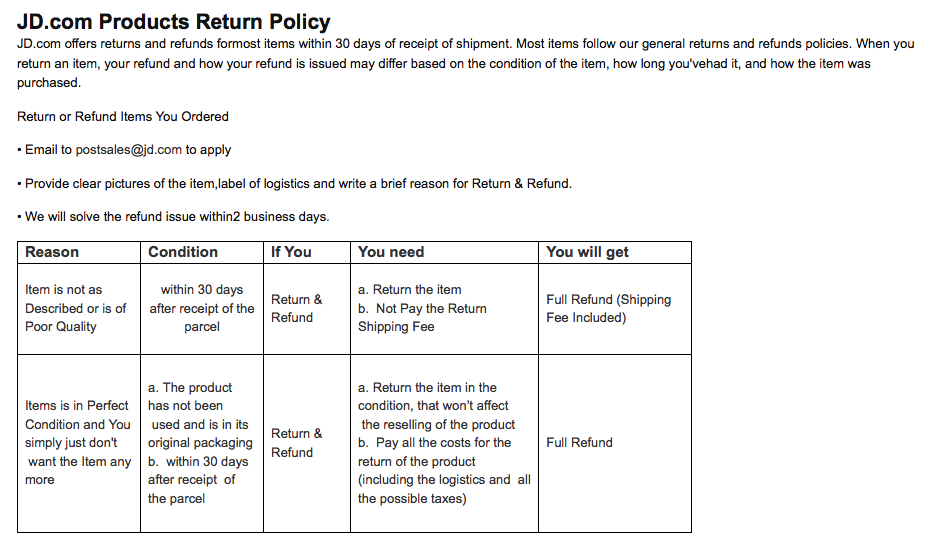
JD.hk and JD.com have different Return/Exchange policies depending on whether the product is fulfilled by JD, or by you (the Seller). However, if you look at their own policy (where JD is the Seller), it gives you a good idea of what the Chinese consumer expects in terms of good customer service:

And here is what JD requires you – as the Seller – to provide customers:

Registering As A Seller

Now let’s take a look at what each e-commerce storefront actually looks like and what each requires of you to register as a Seller on that platform. Again, if your head starts spinning, remember that I have distilled all this information down into a simplified China E-Commerce Comparison Chart – so just click over there whenever you need to!

Taobao

Any overseas company or individual can register to be a seller on Taobao for free, you just need provide your passport and your Chinese bank account details. You need to have a Chinese bank account, or, an overseas account that will accept payment in RMB (Chinese Yuan) because that is only currency Taobao makes payments in.

OR, you can use Alipay to convert your RMB revenue into US dollars (or 12 other currencies) and deposit to your local bank account, but the minimum conversion amount is USD $5,0000. So, Alipay will not convert and transfer your sales revenue to your local bank account until you have accrued at least USD $5,000 in sales.

Alipay charges 3% commission on each transaction ongoing.

Tmall

To become a seller on Tmall, foreign companies need to apply for a business license in mainland China and open a Chinese business bank account. Tmall sellers also need to contract their own warehouse and fulfillment center in China and be able to accept and process returns to their warehouse. They must offer Mandarin customer service via Tmall’s Aliwangwang chat service.

The fees you need to pay will vary depending on the type of company/brand you are, and your annual sales volume. For example, you would need to pay a security deposit of RMB 100,000 Yuan (US$15,000) if your company has a registered trademark “TM”. But if your registered mark is “R” then you only need to pay a security deposit of RMB 50,000.

In addition, you would also pay an annual fee of RMB 30,000 Yuan. When your annual sales volume reaches more than RMB 180,000 Yuan, you will be returned RMB 15,000. When your annual sales volume exceeds RMB 600,000 Yuan, your annual fee will be completely refunded. After your company’s application is checked by Tmall and you have submitted the appropriate fees, your company can become a Tmall seller.

You can use your local Chinese bank account to collect sales revenue. OR, you can use Alipay to convert your RMB revenue into US dollars (or 12 other currencies) and deposit to your local bank account, but the minimum conversion amount is USD $5,0000. So, Alipay will not convert and transfer your sales revenue to your local bank account until you have accrued at least USD $5,000 in sales.

Tmall also charges 3% sales commission on each transaction ongoing.

Alibaba.cn (1688.com)

If you are a foreign company wanting to sell on Alibaba.cn (more commonly known in China as 1688.com), you first need to submit your local business license and after passing an examination of your license, you will need pay RMB 7,000 Yuan (USD $1100) as a security deposit and RMB 3,688 Yuan (USD $580) as the annual fee. After that, you will become an Alibaba seller.

You can also apply for a Chinese business license if you wish and submit that license instead. After passing the license inspection, you would then pay the same RMB 7,000 Yuan as the security deposit and RMB 3,688 Yuan as the annual fee.

Again, you can use your local Chinese bank account to collect sales revenue. OR, you can use Alipay to convert your RMB revenue into US dollars (or 12 other currencies) and deposit to your local bank account, but the minimum conversion amount is USD $5,0000. So, Alipay will not convert and transfer your sales revenue to your local bank account until you have accrued at least USD $5,000 in sales.

Jack Ma has tried to make it as easy as possible for foreign companies to sell on Alibaba.cn. However, some predict the entry will become more complicated in the next few years. At this point, when you or your agent contact Alibaba.cn about becoming a seller, they will appoint a special staff member to help you out.

JD.com

To become a seller on JD.com, you must have a Chinese business license and a Chinese bank account. JD.com only pays out in RMB (Chinese Yuan). A security deposit of RMB 50,000 (US$7500) is required, along with an annual fee of 12,000 RMB (USD $1800) and JD.com takes 7% commission on each sale.

The seller must clear all products through Customs and must have a warehouse/ fulfillment center in China. You must also be able to accept returns and have Mandarin-speaking customer service available through JD Dongdong chat service.

To sell on JD.com the seller should factor in the cost of international shipping and import tariffs, to the retail price of product. Then the seller should either ship for free to the Chinese customer, or, only require the Chinese customer to pay for the domestic shipping.

If you would like to check out JD.com (in English) and get an idea of the shopping experience they provide, you can go to: http://en.JD.com/
You may notice that they are catering to the Russian consumer, so Russia obviously buys a lot of goods from China online. But prices are in US$, shipping is free (so built into product cost) and shipping time is often listed at 35 days.

JD.hk

You do not require a Chinese business license or bank account to sell on JD.hk. All you need is your foreign (local) business license and a bank account that can accept US dollars, as JD.hk pays out in US dollars. Your bank account can be located anywhere.

A security deposit of USD $10,000 is required, along with an annual fee of USD $1,000, and JD.hk takes 6% commission on every sale.

Product may be shipped directly from overseas to China and temporarily warehoused in the Tariff Free Zone (TFZ). This speeds up the arrival of goods into China. China has a unique exemption where products incurring less than RMB 50 in Customs fees can be sent as “personal parcels,” where the Chinese buyer does not have to pay any Customs fees. So for most products, as long as the value of the product is less than RMB 1,000 it will qualify. However, certain items, like health products, are taxed at 10%, so then the maximum parcel value can only be RMB 500.

So the way Sellers get around this limitation is to split the shipment up into smaller packages – each one worth no more than RMB 1,000. So let’s say a Chinese buyer purchased $700 worth of product from you. You would first ship your inventory of that product to the TFZ. Then you would split that $700 order into 5 parcels and send 5 separate parcels to your Chinese Buyer. That way, the Chinese buyer would not have to pay any Customs taxes when the product is mailed from your warehouse in the TFZ to the buyer. This is common practice and you will often see notifications by Sellers on JD.hk about this.

Obviously, if your products cannot be split into smaller parcels, then you will need to have an agent or fulfillment center in China who can handle the Customs clearance for you. Chinese buyers cannot and will not handle import or customs regulations – they are too complicated! Technically, you could ship these “personal parcels” from overseas, direct to the Chinese buyer, but there may be delays if the parcel is held, or examined by Customs. If you ship them to the TFZ, then you are guaranteed there will be no delays.

The seller must have a product return center in China. The terms of Refund or Exchange can be specified by the seller, unless the product is of poor quality – in which case a full refund, including shipping fees, must be given.

If your application to be a Seller is accepted, then JD.hk will appoint an English-speaking representative for you.

Amazon.cn

To sell on Amazon.cn, you must have a Chinese business license and a Chinese business bank account. Amazon.cn only deposits in RMB Chinese Yuan.

A safety deposit of RMB 50,000 (USD $7,000) is required, no annual fee, and Amazon.cn takes 8% of each sale ongoing.

The seller must clear all products through Customs. And then either have their own warehouse/fulfillment center in China, or, pay to use Amazon.cn’s warehouse and delivery service.

The seller should factor in the cost of international shipping and import tariffs to the retail price of product. Then, the seller should either ship for free to the Chinese customer, or only require the Chinese customer to pay for the domestic shipping.

All products must have Chinese labels. After the buyer signs for receipt of the product, Amazon.cn will not accept the return and the buyer needs to contact the seller directly; who can specify their own Refund/Exchange policy. BUT due to Amazon’s rating system, if you do not treat your customers well, you will get a poor rating and your sales will plummet. There are no online customer service requirements.

When a consumer searches for a product on Amazon.cn, similar products from Amazon.us will display, but the consumer cannot directly select and purchase from Amazon.us, unless they have a separate user account on Amazon.us. When a consumer searches for a product on Amazon.us, similar products from Amazon.cn will not display.

Help! What Would Jini Do?

Now just in case your brain is swimming in confusion right now, trying to sort out all these rules and regs… the pros and cons of one e-commerce platform over another… have no fear! I have simplified and compiled all of this info down into a handy-dandy China E-Commerce Comparison Chart.

As you scan the columns of this chart, you will quickly realize that Taobao.com is the cheapest e-commerce platform to get started with, but JD.hk is probably the easiest.
Selling Retail Products to Individual Consumers – so, if your company is a small to mid-size business that manufacturers, or Private Labels, or purchases products wholesale, that you would like to sell at retail prices to individual consumers; you will have to decide whether ease or cash flow are your priority in getting started.

If cash is tight, then Taobao may look like your best bet. However, you will need a bank account that can accept payment in RMB, and then you will have some issues around converting RMB to your local currency and getting the money out of China – see the section below on Setting Up A Bank Account In China. OR, you can use Alipay to convert your RMB revenue into US dollars (or 12 other currencies) and deposit to your local bank account, but the minimum conversion amount is USD $5,0000. So, Alipay will not convert and transfer your sales revenue to your local bank account until you have accrued at least USD $5,000 in sales.

On the positive side, Taobao is part of the Alibaba Group, so you may also be able to use Alipay to get access to the business funding options that Alipay offers. However, you will also need to set up a Chinese warehouse and fulfillment center.

So, in some cases, you may find JD.hk the easiest way to start, because they will deposit US dollars directly into your current bank account, so you don’t need to deal with converting RMB Yuan and transferring money out of China. If your products are under RMB 1,000 (about US $158) then you also don’t need to set up a Chinese warehouse and fulfillment center. You can ship parcel post directly from your country. So those are two big barriers to entry overcome immediately. Although the fees (US $1,000 annually) and security deposit (US $10,000) are substantially higher than Taobao, in my opinion, the ease of use makes up for it!

If you have a large, robust business, then I would use Tmall – because, although it’s the most expensive, it has the greatest pool of buyers and you will not have to spend the time building up a credible track record. You will also have the funds to set up the banking network needed to convert and transfer RMB out of China – see the section below on Setting Up A Bank Account In China.

Selling Wholesale Products to Business – if your company only wants to sell products or raw materials at wholesale prices to other businesses; then I would use Alibaba.com and Alibaba.cn (1688.com).

Funding Your Expansion Into China

Just to make this option even more exciting for you, as you learned in the second video, Jack Ma is one of the few people who understands the metrics for assessing small business loans. So be sure and check out his e-Credit Line in case you’d like some financing to purchase products or raw materials from Alibaba.

Of course, we also have a few more ways for you to raise capital, so also check those out if you’re in need of expansion funds.

Use My Chinese Agent!

The important thing to keep in mind for any Chinese e-commerce platform is that all of the application forms are in Mandarin. As are all the forms and correspondence for setting up a bank account, or warehouse/fulfillment center, or applying for a Chinese business license. So to apply to become a Seller, you will need a Mandarin-speaking agent to assist you in the process.

If you’re ready to expand your business into China, or you just want to test the waters a little bit, I’m happy to pass onto you the name and contact information for my agent in China. Just email us and we’ll introduce you. And by the way, he recommends setting up your warehouse/fulfillment center in a Tariff Free Zone like Shenzhen, Shanghai, or Dalian to make the arrival of goods (AOG) easier.

Of course, you can also look for and hire an agent yourself through Upwork.com (formerly Elance and Odesk).

Setting Up A Bank Account In China

When you need to set up your Chinese bank account, my agent recommends you use either Bank of China (BC) or Industrial and Commercial Bank of China (ICBC), located in Shenzhen, Guangzhou or Shanghai. He prefers Shenzhen (which you’ll notice above is also a TFZ – Tariff Free Zone). You will need the following documentation to apply for a Chinese bank account for your company:

a) Your business license, registered in China (original copy) – see below
b) Your passport (original copy)
c) You can fly to China and open the account yourself, or you can use an entrusted agent to open the bank account for you.
d) The foreign exchange purchasing amount (i.e. the amount of RMB you can convert/exchange each year) must be examined and approved by the China Foreign Exchange Control Administration.

When you take into consideration the convenience of merchandise exports & imports, entering and departing China yourself, administrative examination and approval, as well as the easy access to warehousing and logistics centers, my Chinese agent recommends you select either the Bank of China (BC) or Industrial and Commercial Bank of China (ICBC) bank in Shenzhen, Guangzhou or Shanghai. He prefers Shenzhen.

When you get into the nitty-gritty of transferring RMB (Chinese Yuan) from your Chinese bank account to your foreign (local) bank account, some interesting regulations can come into play. Obviously, you will have to check with each individual bank when you get to this stage for updated information. But at the time of writing, here’s how it works when you sell your products on Taobao, or Alibaba.cn, or Tmall; using Alipay as the payment processor:

You can only withdraw your money in RMB Yuan at a maximum amount of RMB 1,000,000 Yuan each time (USD $158,000), up to three times per day. Alipay does not charge a fee.

However, due to Chinese foreign exchange controls, you can only exchange/convert a maximum of USD $50,000 worth of RMB per year, unless you get special permission from the China Foreign Exchange Control Administration.

So the way around this law is to open a bank account in Hong Kong (such as HSBC or SCB) and transfer your money in RMB from your Chinese bank account to your Hong Kong bank account. You then convert the RMB in your Hong Kong bank account into the currency of your choice. And then you can transfer it to your local bank account.

OR you can use Alipay to convert your RMB revenue into US dollars (or 12 other currencies) and deposit to your local bank account, but the minimum conversion amount is USD $5,0000. So, Alipay will not convert and transfer your sales revenue to your local bank account until you have accrued at least USD $5,000 in sales.

For this reason, you may prefer to use JD.hk as your e-commerce platform as it is the only platform that will pay out in US dollars, directly to your local bank account – ease of use and reduction of hassle can be worth a lot!

Applying For A Chinese Business License

You’ll notice that some of the e-commerce platforms allow you to submit your application using your foreign (current) business license, whilst others require you to submit a Chinese business license.

Again, you will definitely need an agent fluent in Mandarin to assist you with this process, but just to give you an idea of what’s involved, here’s the  process and materials currently required to apply for a Chinese business license:

1. Certificate of Approval process: send an application to the branch of MOFTEC of the People’s Republic of China in the city you want to apply for a business license. You will get the certificate within 90 days after you are approved.

Materials required for Certificate of Approval application:
a. Your passport
b. Proofs provided by China’s embassy in Canada (including your legal documents and credit certification)
c. Application letter
d. Feasibility study report
e. Articles of incorporation
f. The appointed legal representative can be you or anyone else. Foreigners need to provide their passport and Chinese people need to provide their identity card.

2. Business license: Once you have your Certificate of Approval from MOFTEC, you then send an application to the industrial and commercial bureau in the city you intend to apply for a business license from. If approved, you can get your business license within 15 days after approval.

Materials required for business license application:
a. Certificate of Approval
b. Proofs provided by China’s embassy in Canada (including the investor’s legal documents and credit certification)
c. Articles of incorporation
d. The appointed legal representative can be you or anyone else. Foreigners need provide their passport and Chinese people need to provide their identity card.
e. The certification of your workplace (office, warehouse) in China

All materials must be original copies and written on your company’s letterhead (except your passport). Materials can be written in English, but must be accompanied by the Chinese translation.

Again, my agent recommends Shenzhen as a good location to apply for a Chinese business license.

Whew! Is this super exciting or what?? Or perhaps you’re just plain overwhelmed at this point and you need to let all this information percolate on the back burner for a while. That’s just fine too and this may be a unit you want to come back to in a year or two. Either way, it’s all good!

But let’s come back down to earth for a minute, and whether you are selling digital products, or physical products, you still need to let your own people (on your email list) know about the great stuff you have. So head on over to the next module where we are going to talk about product launches.