So you’re getting ready to put your heart and soul out there to the world on your website; connecting with all those potential customers; giving them your unique views, help, information, problem-solving: whatever it is you offer in your existing or dream business. So who exactly are all those potential customers? Who exactly are you speaking to and hoping to connect with?
Right now, we’re just going to drill down on an essential part of your business’ ability to connect with potential customers: what do you have that makes you unique, and how do you provide the answer to your customer’s problem, or need, or desire?
Answer the following questions (remember, it is far more powerful to write, type or audio record your answers, don’t just answer in your head!) and they will help you decide how you want visitors to experience your site. If you get stuck, you may want to read through all the questions below first – as many of them relate to and depend on each other – and then once you have an overview of all the different components, go back and answer the questions.
NOTE: Don’t just give logistical answers, like “my customer wants a new floor” – if you have a floor refinishing business, for example. Always think about your customer as a complete person, not a machine. So a customer that wants a new floor also wants:
- to be able to look at his floor with admiration,
- wants a beautiful shine and color to enjoy,
- wants to have his visitors come over and say, “Wow, your floor looks great!”
- Maybe he wants it to look new and luxurious because he’s putting the house on the market.
- Your customer wants to FEEL beauty and happiness and “ahhhhh” when he looks at his new floor.
Can you feel the emotional difference between these statements vs. “wants a new floor” – get it? Okay, grab you notebook, and let’s get started…
Imagine YOU are a visitor or potential customer coming to your site – and if you don’t have a site yet, you can just pretend (this is just as useful a process)… What are you looking for?
What are your problems or desires?
What do you want to know?
What would be interesting to you?
What would help you?
Next (you can switch back to being you again), answer these 5 key questions to help you really nail down and define what your business is about and what you can offer people.
- Which problem(s) do you solve for people?
- What need do you meet or supply? Which desires do you fulfill?
- What is your story?
Remember, your story is your compelling sales tool. People don’t buy facts or data, they buy benefits (as per the two questions above) and they buy because they believe in you and trust you. Your story – make it as sincere and transparent as you can – will help accomplish that.
Who are you?
How did you get to where you are?
What journey did you walk?
How did you rise like the phoenix from the ashes?
How did you turn your frustration, or sadness, or pain into something that makes the world be er (and now you are o ering that to others)?
And why now?
If you’ve already worked through “How Do I Tell My Story?” then you can look back on your answers, and then use the bullet point questions above to summarize your story again here. And if you haven’t, click on the link above to learn more in-depth story stuff.
- How are you least like the competition? (If you don’t know who/what your competition is, then take the time now to research that and then come back here.) How does your thing differ from their thing?
- Take a few moments now to think about and define your ideal site visitor or customer, i.e. WHO are you solving the problem for?
- Look at your answer for point #5 above – the person you defined as your customer – these are the people that will form your community, your tribe. Would you like to go away on a retreat with these people for 2 days? If the thought of that fills you with excitement and eagerness, you’re on track. Write your answer and thoughts here:
NOTE: If the answer is no, then you may want to re-examine your positioning! How can you expect to build a relationship and have long-term success with people you don’t even want to spend a weekend with? Perhaps you are targeting the wrong person, or presenting yourself in the wrong way, or perhaps you have chosen the wrong business. Take the time now to re-evaluate and adjust as necessary. Or to gain some more clarity, check out this great audio on WHO your ideal customer is, and then come back here.
- Now that you have a better idea of who your ideal customer is, write down who your customer is NOT (i.e. do you NOT appeal to adults or children, women or men, Christians or Buddhists, etc.):
Is this starting to be fun, or at least interesting? If you’re still with me and this process, move on to “How Do I Figure Out Who My Customer Is?” to get deeper into the details of this crucial business planning step.
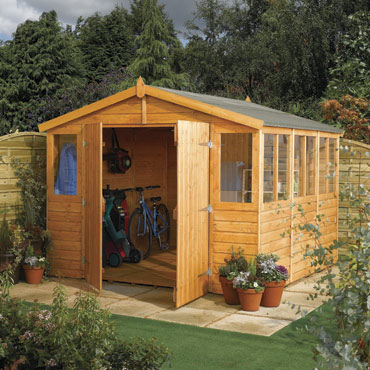 Let’s really explore this process by using an example: Let’s say you know everything there is to know about garden sheds and you want to feature 5 of the best models you’ve found on your site. You plan on generating money from affiliate links (these are commission-based referral links), plus an instruction kit on how to build your own super-amazing garden shed (which you will sell as an ebook with diagrams, lists, workbook, etc.). You may start off thinking that pretty much anyone could be your customer…
Recent Comments