How Do I Know If I Should Be Blogging?

If you are trying to run or launch an online business…you need to be blogging. At the very, very least, keeping your blog updated is like making sure the Open/Close sign on your shop window says OPEN. An abandoned blog looks like dust accumulating on the counters, windows smudged, and that closed sign sitting there – does anyone ever turn it over? Is anybody home? Who’s going to buy from a shop like that?

I see this problem over and over – someone’s site looks great, they’ve added lots of new products, but no one knows they’re there because they’ve only published a few blog posts! So then they think their site/internet biz is not working. Gah!!

I am REALLY REALLY REALLY pushing this BIG TIME. You MUST MUST MUST blog!!

The first thing that will happen is the spammers will find you and begin posting comments. That’s good, because it shows you’ve just popped up as existing online! But don’t approve those comments (look at the comment poster’s email and website for Russian, eastern European addresses, or commercial websites, or just general nonsense), unless they look legit.

KEEP BLOGGING.

The next thing that will happen is real people will begin commenting. Now you know you’re starting show up on the web. As more people comment, your site gets more opt-ins (which shows you more web traffic is coming in), and THEN you will start to show up at a decent ranking in search engine results. Depending on how many sites are in your niche, this could take 6 months to 3 years! But you must not give up, you must keep blogging – at LEAST one blog post per week.

The more you learn about integrating keywords and search engine optimization (SEO), the more “findable” you’ll be, too. How many times have you typed in specific phrases or keywords into Google, and been surprised or delighted to find a blog by someone who’s already done what you want to do, or researched your problem, or learned the hard way – and wants to share it with you, for free? That’s one great way for you and your products to be found in the great sea of the internet – and believe it or not, it doesn’t have to be random and you can definitely influence the likelihood of this happening with a few tricks and some know-how.

The other reason to blog at least once per week is so that people know you’re serious and “active”. A friend of mine went to one Freedomite’s site, but noticed that she hadn’t blogged for 2 months, so figured she was shutting down, or going out of business. Thus, she didn’t even consider buying anything from her. Don’t make that mistake! Blog!

Consider it maintenance, infrastructure, foundation, or simply keeping up appearances – the truth is, that blog is all of those things and more for your business.

But it’s also your playground, your open journal, your stage, and your laboratory. Don’t blog because you have to – blog because you want to.

Seriously, I blog because it’s fun, educational, and beneficial for ME as well as my readers and my business.  Or, DO blog because you have to, if that’s how you get going: set yourself a weekly goal of one blog post a week, and stick to it. Bribe yourself, threaten yourself, or find your flow – I don’t care, just blog!!!!

…capiche?

Say it with me now: build your email list, and blog. Build your email list, and blog.

There IS an exception to this rule, and that is if you have a business that does NOT rely on traffic generated by search engines. For example, let’s say you have a high-end consulting business where you only have room for 5 clients and all your clients come to you through word of mouth. In that case, you may not need a blog at all! Because your site may function solely as an extended business card, or brochure. Your site may also be the internationally-accessible place for magazines, or events looking for speakers to download your press kit.

In scenarios like that, you do not need to blog regularly. But, if you need to have a steady flow of visitors to your site in order to get yourself and your stuff out there, then you absolutely need to publish at least one blog post per week, or you won’t show up on search engines and no one will know you exist!

In the rest of this unit, we’re going to look in depth at HOW and WHAT to blog, how Facebook (or the social media site of your choice) can be a simple, cheap, and effective marketing platform, and how to optimize your posts for search engine ranking and searchability.

Just remember – blogging is the single, GREATEST thing you can do to build your site traffic, your reputation, your brand, and your search engine ranking. Okay…rant is over. Mostly. For now.
How Do I Use My Blog to Increase My Email List?

Not only will blogging bring new visitors to your site, but you can increase sign-ups to your email list by sending people to your blog to read your interesting posts or watch your great videos (embedded in your blog post). How does this work?

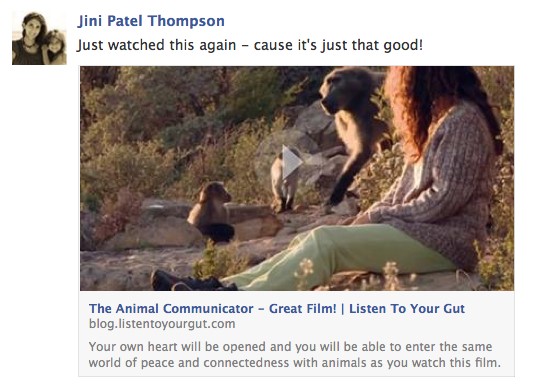
When you post on social media (Facebook, Twitter, Instagram, Pinterest, etc.) always post a blog link, so your followers will come to your site, like this one:

17_05See how it looks like I’m linking to the film, but it will play within a blog post on my own site (listentoyourgut.com)? It’s a great way to use your blog without having to write an entire original post. If your blog post – or another post that catches their eye while they’re there – is interesting, or helpful, or entertaining, they might want to find out more about you, or stay in touch with you and then they will either sign-up for your newsletter, or your free eBook, or your free mini-course, or subscribe to your blog, etc.

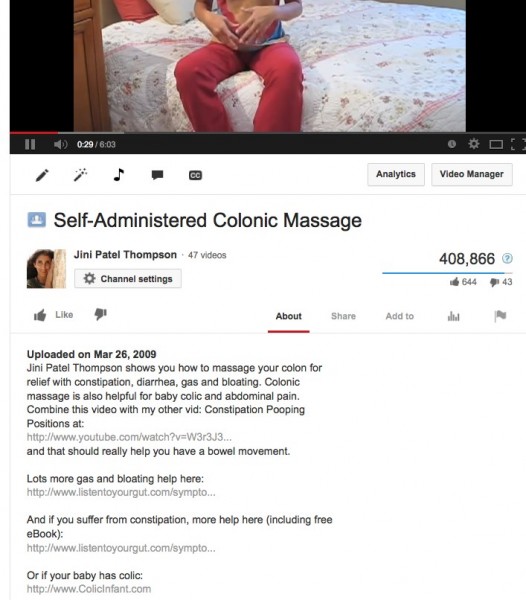
When you do a YouTube video, tell your viewers you have detailed info or a free report about that topic on your blog – then give the link orally and also put it as a hyperlink in the video description field (the ABOUT section) and also link an annotation on the video (see “Annotations” on YouTube for how to do this – it’s very easy), so they can click directly to it. Remember, the goal of all your site promotion activities (social media) is to get people to sign-up or opt-in to your email list. Here’s an example, in the About section for this video, I give a link to another helpful video, plus 3 helpful site links:

17_06

Easy! Just make it a habit – always make sure you’re sending people back to your website, to increase their chances of signing up on your website.

How Do I Know How Often To Blog?

Some Internet marketers will tell you that you must blog every single day. However, I’ve found a much better strategy is to blog only as often as you have something valuable, interesting, profound, or helpful to say.

A site full of garbage, recycled or boring content isn’t going to do anything for your brand, your reputation, or your site visitors – and it’s not going to make people opt-in to your list so they can receive more boring garbage! So don’t blog unless you have something good to post.

This is the main reason why – even though I love outsourcing everything possible – I don’t like hiring someone else to write my blog posts for me (as many do) – are they really going to post great content that makes visitors say, “Wow! Where can I get more?” Are they going to 100% understand my niche and what interests them, and me? Not likely.

I probably blog an average of once per week. Some weeks I’ll post three times, but then a few weeks can go by when I post nothing. Again, I only post when I have something I really want to share.

HOWEVER, you also need to know that unless you blog, no one will ever find your site! You can have the best website in the world, with a great opt-in offer, fantastic products, amazing design… but if you are not blogging interesting, entertaining, or useful content, then Google won’t index your site. This means your site will NOT show up in any web searches and no one will even know you exist.

The entire purpose of blogging is to attract visitors to your site, so people can find out about you! So if you’re not selling much, or not getting sign-ups for your freebie offer, then you MUST GET BLOGGING! So if you need a firm guideline, then tell yourself you need to publish at least one blog post per week.

But what if you would like to blog more often? Or maybe you just don’t have any ideas, or you’re unsure of what your readers would actually be interested in…Never fear, I’ve got a whole bunch of ideas to get you started!

How Do I Know What To Blog About?

Blog Post Ideas for When You’re Stumped

Firstly, your readers are interested in pretty much ANYTHING that you are interested in. You are creating and then feeding your tribe, so be the leader! They will follow you. Here’s a quick list of ideas for what to blog about when you’re stumped. See which of these gets you excited, then run with that – and you may come back here repeatedly, or print out this list and stick it above your computer.

Guest Posts or Interviews – These are an easy way to post, because most of the content is created by other people! Be sure to choose people who have excellent advice and things to say that would be helpful to your readers. Aside from creating excellent content for your site visitors, it’s always good to connect with other bloggers and experts in your field for networking purposes and to help position you as a ‘mover and shaker’ in your field.

You can approach someone whose work you love and ask them if you can share one of their blog posts with your readers, or you can request an interview with them. For busy people, you may ask if you can do a mini-interview, with only 3 questions that they can either email you the answers to, or tell you over the phone.

Ask Your Readers – Don’t have enough content for one post, but have a subject in mind? Why not ask your audience what they think? You’ll get to hear what your readers think, build a sense of community, and they create all the content for you! You can simply post a paragraph or a few lines, telling your readers what you’re thinking about, or the question you want their feedback on.

Ask them specifically to share their thoughts in the Comment section below – don’t assume people know how to comment on your blog post. Now you also have content for your following blog post, where you can do a follow-up post talking about what people said, this makes your audience feel included and builds your relationship with them.

Case Studies – This is where you share stories or examples of a person (or a few people) who have either struggled with a similar problem, or used your product or service to help themselves. You can grab a lot of this content straight from the emails people have written to you – just change their names or identifying details, unless you get their permission in writing. My policy is to only give the person’s initials and the state/province they live in, to protect their privacy.

Feedback or Testimonial – This is similar in content to a Case Study, but the purpose of sharing it and the positioning is completely different. While case studies are usually presented to make a point, or to analyze data (responses), pure feedback or testimonials are much simpler. You can post a testimonial by simply writing a one-line intro, for example: “Wow! I was so moved by this letter from a reader, I just had to share it with you:” Again, my policy is to only give the person’s initials and the state/province they live in, to protect their privacy.

Book Review – These work really well as blog posts for several reasons. Firstly, they allow your reader to get inside your head and get to know you better. You’ve heard the saying, ‘you can tell who a person is by the books they read’, so this is an intimate way to build relationship with your readers. It is also helpful, because most people are looking for a good book to read, or suggest to their bookclub. And lastly, you can include the Amazon link (from your Amazon Associates/affiliate account, so you receive a commission) to the book – makes it easy for people to pick up the book and you earn a bit of money!

Movie or Album Review – See Book Review above, all the same stuff applies, but you can give your opinion on your favorite musician or movie.

Give Your Thoughts On Other Blog Posts – Giving your opinion on other key blog posts can be really helpful for your audience. Show your readers you have their best interest at heart, by connecting them to other people in your niche. Link to posts you’ve read that you think would be great to pass on to your readers. As a bonus, the blogs you link to may take notice, which may spark a helpful or profitable relationship in the future.

Answer Reader or Customer Service Questions – This is a great way to multi-purpose your content. You are taking the time to answer someone’s question anyway, why not make it available to the rest of your readers? If someone is asking, there are at least 10 others who have the same question, yet didn’t bother to contact you. So don’t miss this opportunity to connect with your readers. Here’s an example:

http://blog.listentoyourgut.com/how-do-you-become-amazing/

Using your blog to answer reader questions also allows you to build a database of FAQs (frequently asked questions). You can have one of the categories on your blog be FAQs and you can also use this as a resource for when your business grows to the point where you need to hire a VA (virtual assistant).

In the meantime, it will also cut down on your time spent answering the same question over and over (trust me, this will absolutely happen). Instead of having to write the same reply over and over, you just tell the person you have answered their question here – and give the link to your blog post. This has the added benefit of driving more traffic to your site. What a win-win!

We do this on my LTYG blog, the category is called: LTYG Shoppe FAQ and is almost entirely managed by my customer care manager.

http://blog.listentoyourgut.com/category/ltyg-shoppe/

I also do this all the time and some of my blog posts that answer a reader’s question go on to become some of my most popular posts, here’s an example (see highlighted text):

http://blog.listentoyourgut.com/hydrogen-peroxide-home-remedies/

Of course, keep in mind that you don’t have to write your answer, you can also video your reply, or record it as an audio. But keep in mind that this can be really valuable content generation.. there will likely come a time when you want to take this Q&A content and package it up as a course, or eBook!

So, however you answer your people’s questions, make sure you can re-purpose it later on. With written text, it is fairly easy to edit later to re-position, or multi-purpose it. But if you’re producing audio or video, you will really hem yourself in if you present your content in a Q&A format, versus a problem-solution format.

For example, Marie Forleo has built an entire TV show around Q&A Tuesdays:

However, I still maintain that by calling her show Q&A Tuesdays Marie has really limited her ability to leverage, or multi-purpose her video content. If she had made each video topic-related, she would be able to package up her videos into theme-related courses, or how-to intensives where each video is a chapter in her course. These courses could then be products for sale, or free series’ that give tremendous value to people who opt-in to her list.

Remember, whether we’re talking about free videos on your YouTube channel or free posts on your blog, very few people are going to spend hours going through your old content to pull out the relevant stuff they need right now! But if you do it for them and package it all up in one place, they will absolutely be happy to pay you for that.

Link to Older Posts You’ve Written – Every day you’re going to have new people visiting your blog, and it’s impossible for everyone to know everything you’ve ever written. Keep new people in touch with your best, most helpful, or beneficial content by periodically listing a few posts from your archives that you’d like to share. Be sure to include a little intro or summary, to get people excited about reading each of the posts – don’t just give the post title and link.

Link To Some Favorite Content – As your products grow, you will be able to feature your favorite items in your blog posts. Or if you launch a new product, you absolutely should blog about it (and more than once!) telling people the story behind why you created it, how you created it, what it means to you, etc.

Don’t assume that people know where everything is on your site, or know everything you have to offer. Here’s a blog post where I featured some of my favorite teleseminars that are sold in my Shoppe:

http://blog.listentoyourgut.com/jinis-favorite-teleseminars/

Personal Stories – Some of you may not feel comfortable sharing personal things on your blog, but if you’re serious about building a relationship with your readers, you have to find some level of vulnerability you feel good about. People buy from people they trust. If you won’t show people who you really are, how are you going to build that trust with them?

So find areas of your personal life, your personal thoughts, or experiences that you do feel able to share. Maybe you want to keep your kids private, but you feel good about sharing your hiking adventures; the challenges you faced, how you overcame your difficulties on the trail, your thoughts as you felt like giving up, etc. That’s great! That gives your readers a glimpse into the real you and helps them feel more connected to you.

Also, keep in mind that you don’t have to always post written text or articles! If you don’t like to write much, you do not have to write your blog posts.


Here are ways to blog without writing more than a line or two:

Post your videos: Every time you upload a new video to YouTube, you should embed that video in a blog post (grab the embed code from under the YouTube video and paste it into your blog post). Include anywhere from one sentence to several paragraphs of explanation, or links to other helpful information, or a thought-provoking question, etc. Here’s an example:

Post other people’s videos: You can also do blog posts that consist entirely of other people’s videos that relate to your content in a way that is either helpful or funny. Simply paste the embed code for the video into your blog post, along with one or two lines about why you’re sharing it. Done. In fact, there are entire websites that consist of ONLY of posting other people’s videos from YouTube – like funnydogsite.com Here’s an example from my site:

Post other people’s articles: As mentioned above, a blog post can also be the first 1 – 3 paragraphs of someone else’s article or post you love with a link to READ MORE that takes them to the author’s site. Unless there is a specified copyright injunction against this, most authors are glad to have this kind of promotion. But remember, you cannot post their entire article, you can only provide an intro (I like to post 3 paragraphs) and then you must link to their blog. They are effectively swapping you the use of their content in exchange for you driving new traffic to their site.

It’s not a bad idea to contact the original author and ask for permission – not only to cover your bases (most folks are happy for the exposure, but it’s possible they might ask you to take the post down if you haven’t asked or if they don’t want to be associated with you), but if you’re lucky you might even start a mutually beneficial relationship, if their stuff and yours is complementary. Who knows, it could even lead to an affiliate deal between you both!

Post audio files or podcasts: If you find it really easy to speak your ideas, but more difficult to write, then go ahead and speak all your blog posts! Simply record your thoughts, helpful information, or tips onto your cell phone, computer or mp3 recording device – then upload to your blog. Could it be any easier?

Then, if you like, go get a podcast plugin for your blog (like PodPress) and set up a Podcast for yourself on iTunes. Or join an Internet radio site and make your blog post audios your radio show. This way you get double mileage out of each audio you create. And of course, you can interview other people. Or have a Question Of The Week that either you answer, or you ask random people to answer. Get creative!

Post a great photo with a few lines: Also, remember that good content doesn’t have to be pages long. A great blog post can consist of just a few lines with a great photo. Bernadette Jiwa is a master at this. Below is an example of one of her blog posts (written on Valentine’s Day), so you can see how useful, powerful and interesting even a very short blog post can be:

Also, something you can tuck in your cap as a great idea down the road; Jiwa then took all these blog posts (minus the photos) and turned them into a 142-page book – with one blog post per chapter – that is selling really well on Amazon, called Make Your Idea Matter: Stand Out With A Better Story.

Another way to blog a photo is to create a photo or piece of art with a great quote added to it, or, use this super-easy, free online meme-generator to create a funny photo with a caption (you can even draw on it). Remember, entertainment or giving people a laugh can lift their day and is certainly valuable content!

IMPORTANT: No matter what you are blogging about, ALWAYS have any links open in a NEW window – so people are not taken away from your site. This is done when you are adding the hyperlink (web-linked text) and you need to check the box that says: Open in a new window/tab – as shown here:

Also remember that we have very simple, yet detailed how-to blog instruction videos. So if you are having difficulty with anything (inserting a weblink or affiliate link, adding a photo or video, publishing a post, etc., we have you covered!.

So now that you don’t have any excuses left, get blogging and don’t forget to fill in your SEO keywords and description for each blog post!

Pat Flynn is a down-to-earth entrepreneur with three different websites. Pat is a very active blogger and here’s what he has to say about the importance of being uniquely you, blogging everything about yourself, and treating your site visitors the way you would want to be treated:

Be Different

The point here is to stand out, and the best way to do that is to be different. That’s why we can still find Waldo (with his candy-cane striped shirt and red cap) amongst a sea of people on a page. He’s unique.

This is exactly how I’ve found success online. I saw what everyone else was doing, and did something different. What everyone else is doing is what consumers and readers all eventually get used to. Choose to go the same path, and you’ll just blend in with the rest.

Here are some personal examples to prove it to you:

With my exam prep website, I was the only one to ever offer an audio guide. I pitched it as a way to study for the exam while in your car to and from work, or while at the gym. Because I was the only one to do this, it became a huge hit and helped me to earn over $30,000 in one single month.

Also, all of the other exam prep websites had “support tickets” that people had to fill out in order to get their questions answered. All I had to do was show a personal looking email address (with my name in it, which is important), that people could use to contact me if they had any questions. I included this in all of the products I offered as well. Whenever I received an email, I responded right away. Word spread, and my site became known as the only place to get an immediate, direct response to a question. Of course, because I wanted to keep things as passive as possible, I included FAQs on the site that people could read before contacting me, which totally minimized the amount of emails I’d get. However, just seeing my email address there anyways helped to make people believe that I was always there to help.

With the Smart Passive Income Blog, I do even more to “be different”. There are so many other “make money online” blogs out there all doing the same thing, that it actually became very easy for me to stand out.

For one, I don’t hide anything. I tell it all from my own experience, even the failures or that parts that I sucked at.

Secondly, I tell people exactly where my money comes from, down to the penny. If you’re a loyal reader of my blog, you know that my monthly income reports tend to be the most popular and most commented posts I that write.

Thirdly, I made sure I had a totally customized blog theme that no one else had.

Fourthly, I blog a lot about my personal life. A lot of you probably know that I have a dog named Gizmo and a son named Keoni. Maybe you’ve even seen the wedding video of my wife and I who turned a boring wedding dance into a killer hip-hop routine. I see so many other owners of make money online blogs who don’t even use their real name, or show one picture of themselves. Sad.

Lastly, and probably most importantly, I don’t hard sell or promote anything. This has probably been the key to my success, but with so many people going online today to try and make a buck, everyone is getting tired of seeing ads and promotions. That’s why you’ll very rarely see them here in this newsletter, and why my blog is virtually ad free. Now that’s totally being different, right?

Even though this is the case, I am still able to earn a lot of money from the blog. This happens because I’ve gained people’s trust, and when I do mention a product I’ve used and one that I trust in my own businesses, other people are happy to click on my affiliate links.

[Note: Pat earns $40,000+ per month from this blog – mostly generated by affiliate links]

So, how can you be different?

I’m sure there are a thousand ways, both small and extreme that you can do to be different. Check out what all of your competitors are doing, and don’t do that. Find something common between the websites that are in your same niche, and do the opposite.”

You should definitely check out Pat’s site, SmartPassiveIncome.com for lots of helpful free tips and advice you can use with your own site.


Full Circle Blogging

zorra-jiniBefore we head to your workbook, I just want to tell you about a recent email I received that really drove my own point home – how important it is to blog not just about your business or product, but about everything and anything that matters to you, because resonance and teaching comes in endless forms. AND, it’s a great example of how your blog and email list are an irreplaceable tool for direct, open communication with your readers and customers.

After a beautiful day at the barn with my horse, Zorra, and my dog, Tiah, I wrote this blog post about our afternoon together – although I provide tons of informational posts about natural health, I also write about anything else I find relevant to healing. In this case, it was about receiving healing from nature and our animal companions. I sent the link out in an autoresponder email (my weekly Newsletter) to my list, along with some other health and nutrition info.

A couple days later, one of my readers sent this reply to my customer service manager:

I owe Jini a big thank you for her lovely email, and the mayonnaise recipe….  right now I’m madly researching lactoferrin, but I thought Jini and you would be interested in this MAP vaccine update.  Not everyone with IBD has MAP, but it seems to be a major player, as you both doubtless know, and this is encouraging news. : )

Bless you both (and Jini’s horse and dog – what sweet, beautiful moments she shared with us all, and what wisdom to choose simply ‘softness’; I’m encouraging our son James to try cranio-sacral massage, and will report on that in due course).

Love to all LTYG people, human and furry,
JP

So a quiet moment with my horse turned into a short blog post, which I sent out to my email list, and in return I received this beautiful email full of warmth and gratitude, and some interesting information to follow up on. See how, even from an automated, online system, my readers feel they know me – well enough to send a friendly note and an update on their lives in reply to an autoresponder email! When you are whole-heartedly open in your blogging, when you put your truest self out into the world and share everything and anything that might resonate with someone, the energy comes back in the coolest ways! The possibilities are literally endless.


Make a list of the ways you think you would enjoy blogging – scan through the lists I gave you in this unit and circle at least 3 of these blog post ideas that appeal to you:

Guest Post or Interview

Ask Your Readers For Their opinion Or Thoughts

Case Study

Feedback or Testimonial

Book Review

Movie or Album Review

Give Your Thoughts On Another Blog Post

Answer a Reader or Customer Service Question

Link to an Older Post You’ve Wri en

Link To Some Favorite Content

Share a Personal Story
Post One of Your Videos
Post Someone Else’s Video
Post a Link to Another Person’s Article Post an Audio File or Podcast

Post a Meaningful Story About What Happened to You Today

Any other blogging ideas or ways that you’d like to offer your expertise, or create community, or help people via your blog? And if you don’t like blogging, then list the ways you plan to promote your stuff through affliate marketing or online marketing:


How Do I Write a Guest Blog On Someone Else’s Site?

Guest Blogging on Other People’s Sites

If your blog has some decent traffic going on – so people in your niche are taking notice of you – or you are already considered an expert in your field, you may be approached by other websites, asking if you could write a ‘guest post’ for their site.

This is a very good thing to do as it increases your exposure and reach within your niche. It also has the added benefit of other experts in your niche pointing out that you are considered an expert in that niche (social proof). Of course, your bio for that guest post would need to contain a link to your website, so that you can also build more traffic to your own site – which it will.

If you’re worried about ‘giving your ideas or expertise away’ it helps to think of it like this: If a print magazine, or compilation book, asked you to write an article or a chapter for them, would you hesitate? Or would you consider it a great way to expand your position as an expert or a ‘player’ in your field, along with great publicity for your name and website? It works exactly the same way when you guest post on someone else’s blog.

Of course, you cannot just use duplicate content from your blog for your guest post. But there are dozens of ways to write about the same topic. Just Google that topic and you’ll see all the different angles, opinions, studies quoted etc. from people who have already written about that topic.

All it takes to make a topic your own, is to include a personal story, or a story about a client, or a news story. That way, even if you are including the same basic information as other articles, the fact that you are writing it in your own words, and within the framework of a story, will make it fresh and unique.

How Do I Use Search Engine Optimization (SEO) On My Blog?

All In One SEO Pack on Your Blog

If you’ve looked around your WordPress dashboard, you may have noticed that you have a plug-in installed (if you followed the Programmer Instructions Form) at the end of your composition window for each blog post, called All In One SEO Pack.

It should look something like this:

See how the SEO Pack has fields for you to fill in the:

  • Title
  • Description
  • Keywords

This is where it’s really important to follow these guidelines for keywords and keyword phrases because this little plug-in will hugely affect your search engine rankings if you fill it in and do a decent job of it.

So in the Title field, this is where you enter either a keyword-rich title, or a keyword phrase. Something that describes your article in an interesting way, but also contains at least one keyword.

In the Description field, you describe briefly the specific help, solution, or entertainment you are providing, but again, you include your main keyword or two in this description.

Lastly, in the Keywords field, here’s where you choose a maximum of five keywords or keyword phrases and separate each word or phrase with a comma. So if you have a keyword phrase do not insert the comma until the end of the phrase. Do not use more than 5 keywords or it looks spammy and will decrease your ranking.

And that’s it! This was actually a big pain in the butt for me when I first started filling out the SEO Pack. However, it made such a huge difference to my search engine rankings that I now do it gladly.

Obviously, you probably won’t have time to research your keywords for every single blog post you publish – so just do the “put yourself in your visitor’s shoes” technique and make your best guess.

If you have a partner or family member who loves this kind of task, you can always get them to go in later and fill out the SEO Pack for you.

When I found this plugin, I already had over 100 blog posts published, so I paid someone (found on Elance) to go in and SEO Pack all my previous blog posts – cause it’s just that good.

How Do I Get My Blog to Automatically Post To Facebook?

Auto-Posting To Facebook

There is a really good free plugin you can get that will automatically post an intro and picture of your blog post to your Facebook page. It’s called:

NextScripts: Social Networks Auto Poster

And then here’s a sample of how your blog post and link will appear on Facebook:

We’ve got you covered if you need help with how to install a plugin to your blog. And then here are the instructions for how to configure the plugin:

http://www.nextscripts.com/installation-of-social-networks-auto-poster-for-wordpress/

One thing: This is not a simple plugin and it will take a bit of time and effort to get it set up. But if you no longer want to spend the few minutes it’s takes to Share your blog post with Facebook, then this is definitely the way to go. Remember, you can always hire a programmer on Fiverr.com to configure it for you for about $5.