How Do I Set Up My Own Affiliate Program?

bigC-aff-adIf you’ve been digging through this site for a while, maybe you’ve notice I often talk about the different ways you can feature another company’s affiliate ads on your site – common examples of companies that make this easy are Amazon and Google AdSense.

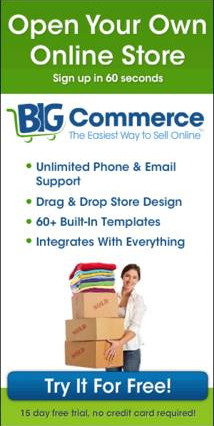
Now we’re going to talk about setting up your OWN affiliate program, so that other people can run YOUR banner ads on their sites! Or they can link to your site or products in their blog posts, or emails, or course materials (like I am doing throughout this LTYF program). The image on the left here is an example of an affiliate ad/banner – click on it and see where it goes! Or, just hover over it with your mouse and you can see that this banner is my affiliate link (commissions go to our charities at LTYF).

Having your own affiliate program is an excellent way to expand your sales network and your audience – without spending a dime on advertising. It’s a classic win-win: You win because other sites advertise your stuff and expose you to new people and they win because they receive a nice, juicy commission on every sale they refer to you.

An affiliate program can also be used to quickly drive new visitors to your site when you’re just starting out and your site is too new to get good search engine rankings.

For example, after I published my first book in 2000, my husband Ian emailed an online health site called HealingWell.com and asked the owner, Peter, if he could send him my book to look at, and then if he liked it, perhaps Peter would like to carry affiliate ads for the book and earn a commission on every sale?

Peter loved the book and immediately registered for our affiliate program (which was with 1ShoppingCart at the time) and then he carried these banner ads on his site:

For many years, Peter’s site generated us more sales than our own site! HealingWell.com now has over 2 million unique visitors per month (continual source of new visitors/traffic) and continues to be one of our top-earning affiliates. And yes, Peter has remained an affiliate with us non-stop since 2000. All it took was a few emails and a phone call and that resulted in over a quarter million dollars in sales for us and a whacking great load of commission money for him!

Of course, we had numerous other affiliates that generated far less revenue for us and them, it goes to show that you just never know which sites will become your top sellers.

How Do I Find Sites To Affiliate With Me?

The secret to finding good affiliates for your stuff, is to approach sites that are already talking, writing, or videoing about your same topic. Approach site owners who are already selling to your niche.

For example, as I was creating this Listen To Your Freedom program for you, I was doing a ton of research. So whenever I came across a site in this same niche that I thought was really great, I added it to my ‘potential affiliates’ list. Then, when I had the LTYF program ready to go, I approached each of these sites and ask them via email and phone (you’ll always stand out if you follow up with a phone call) if they would like to affiliate with us.

The other way to find great affiliates (commission sales) for your stuff is to do a search on your topic or niche. Then visit each of the sites that come up in the first 10-20 pages of search results and contact the ones you think would be a good fit.

So, if you’re stuck in a scarcity-mindset (make a note to yourself to clear that block to abundance!) you might be thinking: But why would my competitor want to advertise my stuff?

However, if you’re coming from an abundance mindset (like grains of sand on a beach; there is more than enough for all of us) you will realize that successful sites are always open to other great stuff they can bring to their readers and blog visitors. Especially if your stuff expands, or enhances, or pairs nicely with their stuff.

A Match Made In Heaven

Let’s say I have a cooking site and I sell my own recipe books on the site. And you have an amazing new kitchen gadget that will cut food prep time in half. So you send me an email with a link to a demo video and then follow up with a phone call.

When I realize that my commission on each sale of your gadget will be $75 and I don’t have to worry about shipping, returns, customer service etc. am I going to affiliate with you and put a banner ad on my site for your product? You bet I am!

Now let’s say I am also hugely popular on the web and you know I have a large email list, or lots of new visitors every day. You might suggest an arrangement where you send me the gadget for free, so that I can use it and test it out. And then I agree to also blog about it (if I like it) and I place my affiliate link to the gadget in the blog post. In addition, I will send an email to my list promoting the gadget. Is that a win-win for everyone, or what?

Let’s take it one step further. Instead of linking directly to your gadget in my email, instead, you have me link to a landing page or sign-up offer you have set up, where my readers will receive a free gift from you. At the bottom of that page, or underneath the sign-up offer is my affiliate link to the gadget for the people who want to buy right away.

Sales vs. Sign-Ups

WHY would this be better than just a direct sale? Take a minute to think about why you would rather have a list of names and emails, rather than a bunch of sales?

Answer: Are you likely to get more sign-ups to receive a free gift than you are purchases for a product people have heard about once? Sure you are.

Remember that people rarely buy the first time they hear about something, or the first time they come to your site. You will always have much higher sales from building a relationship with them first; educating them about why your gadget is so great and the many ways it will make their life easier and better and save them money (benefits).

Also, what happens when you have your next product ready to sell? If I’ve joined your affiliate program and you have just garnered 1,500 names and emails from my list (the people who signed up for your free offer that I advertised to my list), you have now tripled your email list to use for marketing your next product! Do you understand how that happens? If my people sign up for your opt-in, or they purchase something from you, they are now part of YOUR list. So having an affiliate program can also help you grow your email list quickly.

Are you beginning to see why having your own affiliate program is so exciting and so necessary?

We routinely have people signing up for our affiliate program (or contacting us about it) that we have never heard of. But they have come across our site – because we are in the same niche – and they instantly want to sell my products along with their own. Yay! It’s a win-win.

How Much Commission Should I Offer?

If you are selling a digital product – an eBook, online course, website membership program, audio MP3s, or any other product that can be downloaded – the normal commission on your retail sale price is 50%. And I have seen some offering 60%.

If you are selling a physical product, that has to be manufactured or printed, warehoused, shipped, and you deal with customer returns and questions, then you can offer only a 40% commission and in some cases a 30% or even 25% commission will be accepted – depending on the costs involved in providing the product.

Selling To Retail Stores

If you are selling your physical products to a physical retail store or a wholesaler, they will want a 40% commission. Put another way, they will require a wholesale price no greater than 60% of what the product retails for.

If you are selling physical products (books, supplements, gadgets, bicycles, etc.) to a distributor, they usually want a 60% commission – or, a wholesale price no greater than 40% the retail price.

Choosing The Best Affiliate Program
So now that you understand the monetary value of an affiliate program and how you can use it to introduce new people to your stuff and drive lots of extra traffic to your site, how do you choose which affiliate program to use? If you’re already using an affiliate program, can you still make it work for you, or will you need to switch to something else for better function or compatibility?

Many shopping carts, or CRM systems come with an affiliate program built-in. But sometimes, your email marketing platform will not interface with your affiliate program, so you need to check for compatibility between all your systems before purchasing anything.

However, I have already done the 20 hours of researching and comparing for you (I’m not kidding!) and in the next unit I’m going to lay out all the options for you – based on your needs and your budget. For now, let’s move onto how you can create or overhaul an affiliate program that works really well to attract people to your product or service.

*Make a note in your notebook to come back to this page again after you have chosen your infrastructure components and are ready to set up your affiliate program.

While we’re on the topic, why don’t we learn how to make our own affiliate banners – what works, what doesn’t, and guidelines to whipping up your own great banners!


How Do I Process Sales On My Site?

Okay, now let’s talk about where/how your shopping cart fits into your site infrastructure. Keep in mind that your shopping cart, your email marketing platform, and CRM (customer relationship management) are all different things.

Your shopping cart is simply the system whereby you:

  1. List your stuff for sale
  2. Process the payment for your stuff
  3. Deliver that stuff to your customer

In the beginning, when you don’t have much to sell, or if your business is fairly simple, then your shopping cart and email marketing functions can be combined. But as some of you know, as your business grows and you add more products and services you may need to differentiate these two systems.

Customer relationship management (CRM) is a more advanced feature and not usually something you have to consider until your business is large enough to hire a customer service person – but of course, it would be nice to have at any stage when talking to your customers, if you can afford it.

In an ideal world, you could mix-and-match shopping carts, email marketing platforms and affiliate programs to come up with the best solution to meet your needs. However, in reality, these different platforms often don’t interface with each other (or not very easily); so you will not end up with one automatically centralized database.

This means that if someone buys a product from you, you will not be able to use your email marketing platform to market to them, because their name and email will be sitting in your shopping cart database. Sure, you could import this customer’s information to your email marketing platform, but if that has to be done manually, it means extra time and hassle.

Always try to automate whenever possible because not only will this make your business run more smoothly, but it will make your business scalable; no matter whether you have 50 customers or 500, there will not be any more work for you, and no loss to the quality of care for your customers, if everything is automated.

Alternately, if you spend a lot of time researching (as I have for you!) you can find systems that can interface with each other, or be easily imported. But then you will still have to set up and manage three different systems, rather than just one, so there is a big extra time cost involved.

Of course, there are companies who have tried to combine all these aspects together and provide all-in-one solutions, but I have yet to see anyone who is offering an all-in-one product where ALL the components are equally excellent – especially if you have a substantial online store.

With Infusionsoft, for example, they have an excellent CRM, excellent email marketing program, excellent affiliate program, but their shopping cart is very basic. Their shopping cart is nowhere near as good as BigCommerce, or even Volusion.

BigCommerce has an excellent shopping cart and good affiliate program, but really basic CRM and no email marketing platform.

You see what I mean?

In the next unit you’re going to look at how you can get other sites to advertise you and link to your stuff, via your own affiliate program. After that, I will then guide you through picking and combining the best components (email marketing platform, shopping cart and affiliate program) for your particular needs and your current budget.

So take a deep breath, you’re doing great and we’re nearly there!

How Do I Communicate With My Email List?

What’s the difference between customer relationship marketing (CRM) and email marketing? The short answer is that email marketing is how you turn your site visitors into your customers and CRM is how you grow your existing customers into great customers. But let’s get into exactly what that means and how it’s done.

Customer relationship management (CRM) is where you can pull up the customer record for Joe Smith (for example) and you can see what he has bought, when he bought that product, which free reports he downloaded, any customer service questions he asked and when they were answered, etc. So that when you are emailing or talking to Joe Smith, you can say, “Oh by the way, I notice you haven’t ordered a replacement filter for your showerhead and it’s been 7 months now – did you want to add one to this order?” Or you can say, “I see that your last order got delayed over the weekend, so we sent you a free widget, did you receive it?”

Joe Smith now feels really chuffed that you know all this stuff about him and he is not just a faceless number in your shopping cart – you see, you are using CRM technology to manage and build your relationship with Joe Smith.

A CRM system also makes it easy for companies that have more than one customer service person to keep track of what’s happening when different operators talk to or help the same customer, at different times. Whatever happens with Joe Smith is logged into his customer record, so the next person can just pull up his customer record when talking to Joe and be instantly up to date.

Email marketing is where you use email as the means of communicating with people who are visitors to your site and have opted in to your free offer, or signed up for your newsletter, or subscribed to your blog, or have purchased something from you.

After someone has purchased something from you, you can use automated emails to get their feedback on your product, or give them something else for free, or offer them your next product or service, and so on.

Mouse Traps Anyone?

Let’s say I’m selling a book on mouse traps and I want to find out if the trap is working well for people. I can have an autoresponder email set up in my email marketing platform to be automatically sent out 20 days after the book purchase, which asks the customer for feedback.

A time-scheduled email that is sent out automatically is called an autoresponder.

I can then have another email (autoresponder) queued to go out in 45 days time (from the date of book purchase) which asks all mouse trap book purchasers if they’re having problems with ants, termites or bed bugs and would they like my free report on that?

Ten days later I can email (autoresponder) all the people who downloaded that report with the first of 3 emails telling them why my eBook on Pest Control is just what they need and how it contains all this detailed how-to information that was referred to in the report. Maybe I want to offer a discount on the eBook (since they’ve already bought the mouse trap book), or a free gift with purchase, or a bonus if they purchase in the next 48 hours.

So your autoresponder (automated emails) sequence for your Mouse Trap book looks like this:

Day 1 – book purchase

Day 20 – Feedback request

Day 45 – Offer for Ants, Termites, Bed Bugs free report

If someone signs up for your free Ants, Termites and Bed Bugs report, then that action (signing up) puts them into another autoresponder sequence that looks like this:

Day 1 – opt-in to free Ants, Termites and Bed Bugs report

Day 10 – Best cleaning products to use (products are affiliate linked to Amazon) for preventing pests and a Discount offer for your full-length book on Pest Control

Day 30 – Link to video on how to Pest-Proof your bedroom

Day 45 – Home remedies for insect bites (affiliate linked to products on Amazon) and time-sensitive discount offer for your book on Pest Control (eg. Offer expires in 24 hours)

Do you see how exciting an email marketing platform can be? And what’s REALLY exciting is you only have to do the work ONCE, in the set up. After that, all these sequences run automatically – while you’re asleep, or skiing, or lying on the beach.

You can also email your opt-ins or blog/newsletter subscribers when you have a special promotion or discount on offer. Or you can send coupons for discounts or free gifts. You can also let your list know when you’ve got a really exciting teleseminar coming up, or when you’ve just put up a really helpful video.

We can get into email marketing (relationship building) more in-depth when you’re ready, and I’ll also show you how to avoid emailing your list too much! All I’m doing here is giving you a basic overview and understanding of email marketing, so you understand WHY you need to have an email marketing program and how exciting that can be for your business.

Free vs Paid?

Many people get confused between what to give away for free and what to charge for. Especially when you’re supposed to be giving your best stuff away for free! So let me give you a few examples to stimulate some ideas for your own content.

Example #1 Professonal Stunt Longboarder

You have an eBook on how to be a pro longboarder. This eBook is a combination of text and demonstration videos.

→ You charge for the eBook (which could also be positioned as a Course, by the way) and you give away your best demo video for free. Which of your videos will produce the most elation (I did it!!) in your viewer? That’s the one you give for free.

OR

→ You charge for the eBook and you take your best video demo and you chunk it down into Parts 1, 2, 3. This then becomes 3 separate emails, each with a message from you, some tips, perhaps a link to a blog post, or an affiliate link to an awesome set of wheels (best for doing the stunt you’re going to teach them) and then Part 1 of the demo video, and so on, for a 3-email series.

Example #2 How To Refinish An Antique Armoire

You have an online DVD course that shows people how to purchase an antique armoire from a flea market and refinish it to showpiece quality.

→ You charge for the DVD course and you select just ONE topic from the course and send an email with some intro text and a video that shows just that one piece of how-to. Maybe you select the topic of how to spot a good buy from a garbage piece at the flea market – that’s hugely valuable, shows your expertise and if someone uses that info to buy an armoire, now they’re going to want your course to figure out how to refinish it!

OR

→ You charge for the DVD course, and you offer a mini-course for free. This mini-course tells them the major (overview) steps involved in purchasing and refinishing an armoire. But it doesn’t give the details; it doesn’t tell them which varnish to purchase, which grade of sandpaper – it talks about why it’s important to choose the correct products, but it doesn’t give out the products or specifications. It also doesn’t contain the videos. It only contains excerpts of 1 to 3 videos (so they can see how good your production, lighting, sound etc. is).

But they have a lot more knowledge than when they started. Probably, if someone wanted to, they could attempt the process themselves – maybe they’re an advanced woodworker and can figure out the details themselves. No worries, maybe that person will then become an affiliate of yours! Or he will refer people to your course.

Example #3 Hypnosis Audios

You have a series of audio-based healing sessions using hypnosis for different conditions: Stop smoking, lose weight, bedwetting, anxiety, insomnia, etc.

→ You charge for your individual audios or sessions and you give away your most WOW audio session for free. What is the audio that is likely to be an issue most of your site visitor’s have? Anxiety, stress, insomnia or weight loss? If you know who your customer is, you should already know the answer to this question. That is the audio you give away for free. Because once someone has a fantastic result, they will tell everyone and they will also come back for help with their other problems.

OR

→ You charge for your audio sessions, but you come up with a free email Mini-Course that will help people with a common problem – Are You Stuck In a Rut? So the first email is a quiz that helps them identify where and why they are stuck, along with a short video from you with some understanding and inspiration in the form of a story. The next email contains a link to an interview or teleseminar you gave on a related topic. The third email contains a download link for a mini-hypnosis session designed to help them feel more positive about their journey or challenges.

Let’s put together YOUR own opt-in that will encourage your ideal customers and site visitors to give you their name and email address!


Jot down quickly any and all ideas of what you can offer your site visitors for your opt-in, or sign-up offer, on your site. What do you have, or what can you create that will let people start building a relationship with you and give them as much value as they would receive from something they purchased from you. What is the most valuable thing you could give them? What would YOU be happy to receive?:


Now that you’ve got some ideas for WHAT to offer people, how do you want to package, or deliver that content/information? To help you brainstorm, which of these appeal to you and would be a good delivery method for your content or message?:

Teleseminar
Audio recording
Video
eBook
Game
Quiz with analysis
List or resource
Recipe
Formula
Picture tutorial
Mini-course
Consult
Mini session
Software app
Review or critique
Template form (legal, business, political)

If you’re stuck, go back to the examples I gave you above and adapt one of them to your content or topic.

Next, make a quick sketch here of your sign-up offer; Your headline, very short description, Name and email:


Remember, it doesn’t have to be complicated or even meaty; it just has to be something you yourself would sign up for. You may also have other ideas pop in your head as you read through this module – just go back to your notes and jot them down.


Now let’s continue on with setting up your site infrastructure so that you can receive those sign-ups, then give them their freebie, and then receive their credit card when they come back to buy from you!

Choosing Your Email Marketing Platform

Your back-end email marketing system can be amazingly complex, depending on how big your business is and how many ways you want to be able to interact with your people. Or, it can be fairly simple and basic and you can build it slowly as you go. I’ll give you a few different solutions later from the most basic, up to Rolls Royce and you can choose what fits you best at this time.

However, much as I’d like to keep things simple for you, we cannot really talk about email marketing platforms without talking about how you’re going to sell things from your site. This is because you need to have your shopping cart (or purchase method) interface or integrate with your email marketing platform – so that you can have a centralized database of all the people who are interested in your stuff.

So although I’d prefer you to focus on just your opt-in offer right now, because I don’t want you to waste your money or time (by purchasing only a short-term solution), I’m going to have to get into your shopping cart options and affiliate programs at the same time.

And unfortunately, this is where things get sticky, because we have to balance “perfect world” scenarios with real-life time and money constraints.

Some systems are fabulous and can do everything you’d ever need or want them to do, but they also take a lot of time to learn and implement. So if you’re a mom with two young children, or maxed-out, full-time with your current biz, you’re going to give up in frustration, since you don’t have enough hours in the day to make use of such a system.

This business program is written for people who might not have 12 hours a day to devote to internet marketing – it will still work brilliantly (and much faster!) for those people, but it is designed for people who only have a few hours a day (and sometimes only a few hours a week) to get a viable business up and running, or, to upgrade their current business to a new and improved, heart-driven, more-hands-off, truly fulfilling and successful model. Sound good?

But I Hate Sales and Marketing!

One last thing: don’t let the words ‘marketing’ or ‘sales’ put you off. All both terms really mean is: Communicating and building relationship.

If you have an aversion to these terms it’s because people have used them poorly in the past – pushy, slimy, grabby, or manipulative are words that come to mind. Make sure your sales and marketing activities are never like that! Those methods may work for one-off, or short-term sales, but they are the kiss of death for building a long-term relationship with your site visitors and customers.

Make sure that every time you communicate with your customers (aka marketing and sales), you are sending an email, or shooting a video, or writing a free eBook that YOU would like to receive. It’s really that simple. If you would not be happy, or entertained, or intrigued to see that piece of communication in your Inbox or mailbox, then don’t send it.

Because good marketing results in a real relationship (two-way, not one-way) it totally turns the typical concept of ‘selling’ on its ear.

Ask And Ye Shall Receive

Let me explain: Since my first book was published, my readers (customers) and site visitors have been emailing and phoning me to tell me what they want next. How cool is that? Forget market research, focus groups, testing the market etc. If your people are in relationship with you, they will tell you what they want!

And then when you produce that for them, there is no ‘selling’ involved – because they asked for it and they’ve been waiting for you to do it and get it to them. So when you make it available, they say “Oh thank you! I’ve been waiting for this – just what I need, thank you SO much!” Well where’s the “sell” in that?

Another way your customers will automatically tell you what they want is by the questions they ask. Let’s say you’ve written a book about energetically dialoguing with your body and your book is very detailed, you’ve laid out the process step by step, but yet you keep getting feedback from people saying they love the book but they just can’t connect.

They just can’t hear clearly what their body is saying. So they’re asking you questions like, “How do I know it’s my body speaking and not my mind?” or “Every time I relax, I just fall asleep, so I never make it to the connecting part, what can I do?”

As you ponder their questions and feedback, you realize that what you really need to give them is an audio (mp3 file) to go along with the book. Now you’re getting excited!

You realize that you need to record a guided meditation that takes them into their body wisdom, so they can relax and just follow your instructions. So you get that out to the people who have already bought your book and you add it to your book listing, so new purchasers automatically receive it.

Now you’re getting completely different feedback from your customers – they love it! They’re having great success with it, they tell you about the ailments they’ve cured. Which leads you to another idea…

You notice from the feedback emails you’re getting that people seem to have a number of the same health issues. Don’t forget, you are receiving this feedback regularly because you set up your email marketing platform to automatically send a request for feedback (autoresponder email) 30 days from the purchase date.

So you notice that there are five ailments that people mention over and over again. So you think, hmmm…. what if I were to create guided healing meditations (or eBooks) for these specific conditions. Not only might my existing customers buy these specific meditations, but I could open up a whole new market here. Because many people don’t want to read a book, they just want a solution to insomnia (for example).

And if I don’t call them ‘meditations’ I may also open myself up to the Bible belt market and other markets who don’t like the word ‘meditation’. You see how this process goes?

Does this process sound like your previous concept of ‘sales and marketing’? Probably not. So take this opportunity now to throw out your old conditioned ‘euwww!’ response to these words and embrace what they really mean.

Exchanging Gifts

Selling used to mean ‘convincing people to buy’. But what if it could mean giving people what they’re asking for – for which they say thank-you by giving you money. You give them a gift (product or service) and they give you a gift (money) in exchange.

Selling is simply an exchange of energy and intentions symbolized by the stuff you exchange (gift each other).

Bernadette Jiwa sums this process up perfectly:

sales

noun

  1. The exchange of a commodity for money; the action of selling something.
  2. A quantity or amount sold.

Actually, sales is understanding how your customer wants to feel, not what she wants to buy and doing everything you can to get her there.

There is no convincing, manipulating or pressuring involved when ‘selling’ means meeting someone’s need, solving their problem, easing their pain, bringing them laughter, increasing their joy. Are you with me?

Take a moment now to close your eyes and let this really sink in. Because switching your old, negative programming to this new paradigm of helping, facilitating joy, alleviating suffering, and helping people by exchanging gifts, will completely change your experience of business. And your sales figures will reflect that.

Concurrently, holding this paradigm of sales and marketing will also keep you rooted in integrity. All your actions, ideas, manufacturing, harvesting, etc. will come from this place of wholeness and integrity. If everyone held this paradigm, there would be no destruction of the environment, or torturing of animals just to provide humans with what they want.

So there you go, let’s be the change we want to see in this world. It all starts with each tiny, little business we start and expands from there. When I threw my first (and I thought only) book out into the Universe, I had no idea that the exact process I outlined above would result in that one book expanding to 16 books, 10 CDs and DVDs, 19 teleseminars, 45 videos and 350 health products – selling to over 60 countries worldwide.

Remember, it’s about communication, not marketing. It’s about doing all you can to give people what they actually want and need, not forcing them to buy something they don’t. And all this automation simply allows for consistent quality and timeliness in your communication and relationships; which allows you to reach, help, and inspire more people, with no drain on your energy or time.

Can you feel the tingle of possibility? Or are you still struggling to envision or trust the process? Either way, keep on reading – there’s no one right way to go at this. Whether you take it all in and implement everything at once, or slow it down and add to your site bit by bit as each piece begins to make sense, doesn’t matter. What does matter is that you learn these processes and find ways to understand them that feel good to you.


Why Am I Not Having the Success I Feel I Am Working So Hard For?

How are you feeling as you’re getting closer to launching your site, overhauling your existing site, or implementing some big changes to your business? Do you notice any resistance arising in your thoughts, feelings of overwhelm, or perhaps a lack of action?  Well you know I’ve got your back!

Join me as I talk to Lisa-Marie Cabrelli from her perspective of being very successful in her own businesses (on Amazon’s Top 25 Seller list for Xmas 2012) and also as a business coach – about the things that come up to hold us back from being and living our truest, most vital self.

As Lisa-Marie says in this interview:

The most devastating thing to me is when you find people who have worked really, really hard for many years, and aren’t where they’re supposed to be, because they haven’t recognized that they have one of these blocks or saboteurs in their life. They haven’t even understood that it existed, so they have not even had the opportunity to work on it. They’ve wasted all of this time and energy working towards something that can never happen, because they’ve got one of these major blocks that are interfering with their progress.”

Join us as Lisa-Marie shares effective tools to overcome, or push through those blocks and saboteurs, for herself and her clients; to clear your blocks to success and living an extraordinary life. This call has the power begin a sea-change in your life, so don’t miss this one!

DOWNLOAD Overcoming Blocks and Saboteurs to Leading An Extraordinary Life

Or click Play to listen:

And here is the Elizabeth Gilbert presentation on Genius that we talk about in the call:

How Can I Shift Subconscious Fears & Beliefs?

EFT Tapping For Money Fears

If you’re not sure what your money fears are, or if they’re something you’ve been avoiding, try this illuminating writing exercise to put words to some of your ingrained patterns – and then come back here!

But if you’re here now and game, then tap along on some acupuncture points with me as I introduce you to EFT Tapping therapy and how it works to shift those subconscious fears and beliefs . Keep in mind though, that when I tap on abundance, I am not just referring to financial abundance. Great food, love relationships, creative endeavours, travel, adventure, etc. are all forms of abundance that we can open to further and increase their flow in our lives.

EFT Tapping is a powerful healing tool because it interfaces between the mind/body and thus can shift things at the energetic, or subconscious level. It also involves your bodily sensations and fears or memories that may be stored in your tissues or organs – so you may feel butterflies in your stomach, or heaviness in your chest. Don’t worry! These are all good signs that your body is speaking to you and signposting the way to your healing.

Note that you cannot just listen to this video! You must tap along with me on the acupuncture points for this therapy to work its magic.

In the beginning, we are going to start by venting, and voicing out loud all the negative crap that may be carried in your subconscious, or that other people have spoken over you, or beliefs absorbed from your parents without conscious awareness (often before the age of 6).

So even though it may feel like we are focusing on the negative and you probably don’t want to dwell on that, it is an important part of the process for unlocking these limiting concepts and moving them into flow; so they can be transformed into life affirming, positive beliefs and feelings that make your world bigger. So if you’re feeling uncomfortable, just stay with me, keep tapping, and know that we have to go down into the depths to bring these things up into the light, where we can then shift and transform them. Stick with the video and know that the positive affirmations and life-enhancing re-frames are coming!

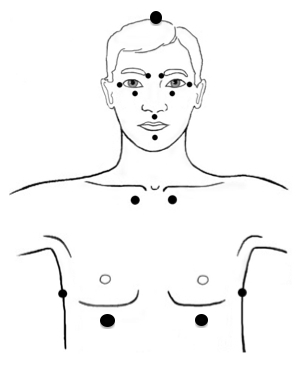
Follow along with me; tap on the acupuncture points I’m tapping on and say (out loud or in your head) the words I’m saying:

Here are the tapping points we are using in this video:

eft-tapping-points.jpg

And if you want to learn more, you can download the Basic EFT Manual. This is such a powerful tool for shift and change that I became a Certified EFT Practitioner myself – because between myself, my kids, my animals and the rest of my family and friends, I use it all the time. And it is phenomenally effective. Try it and see what you think!

BY THE WAY… take note of the fact that I made this video a public-access video and I also gave out the website for Listen To Your Freedom along with a free offer. This is all part of building relationship with your potential customer (always give awesome stuff for free), and using social media to tell people about your stuff. Each of these concepts will be covered in greater detail as you work your way through LTYF. For now, I just want to call your awareness/attention to these elements of building a successful online/automated business.

Why Do I Feel Like I’ll Never Earn Enough Money?

If, as you imagine making a good living from something you love doing, you find yourself beset with self-doubts, or asking yourself questions like:

  • Who am I to think I could do this?
  • I’m already so fortunate – how can I possibly ask for more?
  • Why should I deserve to live a better life than anyone else in my family?
  • How dare I even try to do things differently?
  • I’m crazy to think I could ever make this happen.
  • This is going to be one more thing I get excited about and then don’t follow through on.
  • This is just going to be another failure.
  • I can never make stuff like this work.
  • Every idea I have is crap.
  • I’m too scared to even think about what I really want – I could never do that.
  • I’m just not organized/motivated/inspired enough.
  • I’m just so tired all the time, I don’t have enough energy.
  • I’m not confident enough.
  • How do I avoid being gutted by other people’s doubts and criticism?
  • People are starving, how can I have so much? I would feel guilty.
  • And so on…

…then please listen to me very closely: If you don’t deal with the root causes of statements and questions like this, you actually won’t ever be successful.

Because until you believe that you deserve abundance (in all its forms) and you give yourself permission to receive that abundance, your core energy and visceral self will keep slamming the brakes on anything you attempt that moves you above those beliefs. We’re taught that giving is good. But giving cannot exist without receiving. We need both processes to be in flow to be any good at either!

This is not a mental or intellectual construct. Of course, logically, we all know that we would love to be rich and that we are worthy of love and abundance – but if we don’t feel that, in our heart of hearts, in our bones, then we will just keep blocking those things from entering our life.

This is why 44% of lottery winners are broke within 5 years and 32% have gained weight – they just cannot handle the incongruence between what they feel inside and their current reality (as an aside, emotionally, excess weight is often about protection – fear – and overwhelm). If you don’t shift your subconscious fears and beliefs about your worthiness, you will find it very difficult to manifest financial success and hold onto it!

So how do you change visceral, embedded beliefs and limitations?

There are many ways to gain awareness of your beliefs or patterns that either block you from receiving abundance, or sabotage it whenever it starts showing up. Blocks and saboteurs show up in all kinds of thought patterns and behaviours, but by learning to recognize them you will begin the process of freeing yourself and your business – which is in so many ways an expression of yourself – to soar ever higher.

I have a variety of techniques that I have personally tried and found to be powerful and effective at clearing and removing the blocks, saboteurs and limitations from my own life – and once you learn them, you can apply them however you need to.

Do NOT skip this process! If you are unwilling to address these issues and seek healing, then you are highly unlikely to be successful in business – or, at the very least, you will not be as successful as you could be.

This is a vital part of the Listen To Your Freedom process. I can give you all the step-by-step business tools and knowledge that I have, but if you have a block or saboteur operating simultaneously, your subconscious (or your ego) will find a way to sabotage you.

So let’s get to work! Grab your notebook and make yourself a quiet space to dive deep…


What Is Money?

We all have beliefs about money that we have unconsciously absorbed from our parents, family members, or childhood events. Almost everyone has inherited negative, limiting beliefs about money – even if they have, or have had, plenty of it in their life. But we cannot begin to shift these beliefs (which then determine our actions) until we know what they are!

So let’s begin the process of uncovering what your conscious and subconscious beliefs and attitudes towards money are.

Let yourself go loose-brain now and fill in the rest of this sentence in your own notebook with as many different words or sentences as you can – don’t judge yourself, or try to fill in the “right” answer. In fact, we WANT all your devious, undercover answers to come on out into the light here. So go ahead and write down every thought – positive or negative – that comes to mind…


Money is :


Now keep going and do the same with the next set – just go loose-brain and write down whatever pops into your head. Don’t edit or judge!


Rich women are :

Rich men are :


Are you surprised by some of your answers? I know when I did this exercise my answers to the ‘Rich women are…’ really shocked me! So now spend some time mulling over the significance of your answers and how these beliefs have been directing your life.

For example, if you’re a woman and you answered, “Rich women are cold and emotionally distant,” but yet you value being openhearted and compassionate… then what kind of roadblock are you holding against yourself becoming wealthy? If you have this kind of strong, negative belief, then you are not going to allow yourself to become rich, because you have an even stronger desire to remain openhearted and compassionate.

So whenever money starts to flow to you, you will shut it down before you receive too much – because you cannot allow yourself to become cold and emotionally distant. Are you beginning to understand how this works?

The great news is that change starts with awareness. Awareness is the rst and perhaps biggest step in the process of changing limiting, contractile beliefs into life-giving, expansive ones. As we go through the Listen To Your Freedom program, I will be giving you more tools to facilitate shift and change for your abundance blocks and saboteurs. But this is the first step along the journey.


Your Money Story

Continuing on, now let’s look at your formative years and your parents (or guardian) specifically. Each of us automatically absorbs components of our parents money stories – both good and bad – and these then form our money story.

In this audio, I talk a bit about my Dad’s money story and how no matter how much money he has, he is mired in poverty-consciousness. He is always in fear of losing his money and never lets himself spend much – even though he is a multimillionaire.

When you look at each of your parents’ money story you will uncover how they feel about money, their beliefs about money, their beliefs about their own worthiness, their fears, their limitations, their judgments etc. And rest assured that you have inherited many of these, simply by osmosis.

So take some time now to recall the things you heard Mum and Dad say throughout your childhood – negative or positive. And write down the way each of them behaved towards money and around money, worthiness, earning money, spending money, etc. If you were raised by someone other than Mom and Dad, then just substitute your guardian or major childhood parental figure or influence.

My Mom’s Money Story:


My Dad’s Money Story:


Write down any insights, or things you never realized before, about how your parents’ beliefs have affected yours:


How was this exercise for you? Did you learn something interesting, surprising, or revealing about your relationship to money? It’s amazing what we can carry around with us that we’re not aware of. Many people start to feel a profound shift after that exercise – if that’s you, try revisiting your answers when you find your blocks and saboteurs creeping up again. And now that you’ve identified some of them, you’ll have an easier time spotting them for what they are – rather than getting sidetracked or blocked by them! You’ve taken the first step in opening up the flow of money and allowing it to come to you.


How Do I Pick A Color Scheme For My Site?

In this unit we’re going to talk about the eight main colors – red, orange, yellow, green, blue, purple, white and black – and how they have traditionally influenced human thought, feelings, traditions and usage.

As you go through the 8 basic colors below, jot down in your notebook any of the points or phrases that resonate with the emotions you already identified that you want your site visitor to feel.

Once you have a basic idea of the colors you’d like to use, I’ll give you a resource that will help immensely to narrow down your pallet and your exact hues – based on how you want your customer to feel!

RED

red

Red is the color of fire and blood, so it is associated with energy, war, danger, strength, power, determination as well as passion, desire, and love.

Red is exciting, attractive, daring, authoritative, forceful.

Red is a very emotionally intense color. It enhances human metabolism, increases respiration rate, and raises blood pressure. It has very high visibility, which is why stop signs, stoplights, and fire equipment are usually painted red.

In heraldry, red is used to indicate courage. It is a color found in many national flags.

Red brings text and images to the foreground.

Use it as an accent color to stimulate people to make quick decisions; it is a perfect color for ‘Buy Now’ or ‘Click Here’ buttons on Internet banners and websites. In advertising, red is often used to evoke erotic feelings (red lips, red nails, red-light districts, ‘Lady in Red’, etc). Red is widely used to indicate danger (high voltage signs, traffic lights).

This color is also commonly associated with energy, so you can use it when promoting energy drinks, games, cars, items related to sports and high physical activity.

Light red represents joy, sexuality, passion, sensitivity, and love.

Pink signifies romance, love, and friendship. It denotes feminine qualities and passiveness.

Dark red is associated with vigor, willpower, rage, anger, leadership, courage, longing, malice, and wrath.

Brown suggests stability and denotes masculine qualities.

Reddish-brown is associated with harvest and fall.

ORANGE

orange

Orange combines the energy of red and the happiness of yellow. It is associated with joy, sunshine, and the tropics.

Orange represents enthusiasm, fascination, happiness, creativity, determination, attraction, success, encouragement, and stimulation.

To the human eye, orange is a very hot color, so it gives the sensation of heat. Nevertheless, orange is not as aggressive as red. Orange increases oxygen supply to the brain, produces an invigorating effect, and stimulates mental activity. It is highly accepted among young people.

As a citrus color, orange is associated with healthy food and stimulates appetite. Orange is the color of fall and harvest.

In heraldry, orange is symbolic of strength and endurance.

Orange has very high visibility, so you can use it to catch attention and highlight the most important elements of your design. Orange is very effective for promoting food products and toys.

Dark orange can mean deceit and distrust.

Red-orange corresponds to desire, sexual passion, pleasure, domination, aggression, and thirst for action.

Gold evokes the feeling of prestige. The meaning of gold is illumination, wisdom, and wealth. Gold often symbolizes high quality.

YELLOW

yellow

Yellow is the color of sunshine. It’s associated with joy, happiness, intellect, and energy.

Yellow produces a warming effect, arouses cheerfulness, stimulates mental activity, and generates muscle energy. Yellow is often associated with food. Bright, pure yellow is an attention getter, which is the reason taxicabs are painted this color.

When overused, yellow may have a disturbing effect; it is known that babies cry more in yellow rooms.

Yellow is seen before other colors when placed against black; this combination is often used to issue a warning.

In heraldry, yellow indicates honor and loyalty. Later the meaning of yellow was connected with cowardice.

Use yellow to evoke pleasant, cheerful feelings. You can choose yellow to promote children’s products and items related to leisure.

Yellow is very effective for attracting attention, so use it to highlight the most important elements of your design.

Men usually perceive yellow as a very lighthearted, ‘childish’ color, so it is not recommended to use yellow when selling prestigious, expensive products to men – few men will buy a yellow business suit or a yellow Mercedes.

Yellow is an unstable and spontaneous color, so avoid using yellow if you want to suggest stability and safety. Light yellow tends to disappear into white, so it usually needs a dark color to highlight it. Shades of yellow are visually unappealing because they loose cheerfulness and become dingy.

Dull (dingy) yellow represents caution, decay, sickness, and jealousy.

Light yellow is associated with intellect, freshness, and joy.

GREEN

green

Green is the color of nature. It symbolizes growth, harmony, freshness, and fertility. Green has strong emotional correspondence with safety. Dark green is also commonly associated with money.

Green has great healing power. It is the most restful color for the human eye; it can improve vision.

Green suggests stability and endurance. Sometimes green denotes lack of experience; for example, a ‘greenhorn’ is a novice.

In heraldry, green indicates growth and hope. Green, as opposed to red, means safety; it is the color of free passage in road traffic.

Use green to indicate safety when advertising drugs and medical products. Green is directly related to nature, so you can use it to promote ‘green’ products.

Dull, darker green is commonly associated with money, the financial world, banking, and Wall Street.

Dark green is associated with ambition, greed, and jealousy.

Yellow-green can indicate sickness, cowardice, discord, and jealousy.

Aqua is associated with emotional healing and protection.

Olive green is the traditional color of peace.

BLUE

blue

Blue is the color of the sky and sea. It is often associated with depth and stability. It symbolizes trust, loyalty, wisdom, confidence, intelligence, faith, truth, and heaven.

Blue is considered beneficial to the mind and body. It slows human metabolism and produces a calming effect. Blue is strongly associated with tranquility and calmness. In heraldry, blue is used to symbolize piety and sincerity.

You can use blue to promote products and services related to cleanliness (water purification filters, cleaning liquids, vodka), air and sky (airlines, airports, air conditioners), water and sea (sea voyages, mineral water). As opposed to emotionally warm colors like red, orange, and yellow; blue is linked to consciousness and intellect. Use blue to suggest precision when promoting high-tech products.

Blue is a masculine color; according to studies, it is highly accepted among males. Dark blue is associated with depth, expertise, and stability; it is a preferred color for corporate America.

Avoid using blue when promoting food and cooking, because blue suppresses appetite. When used together with warm colors like yellow or red, blue can create high-impact, vibrant designs; for example, blue-yellow-red is a perfect color scheme for a superhero.

Light blue is associated with health, healing, tranquility, understanding, and softness.

Dark blue represents knowledge, power, integrity, and seriousness.

PURPLE

purple

Purple combines the stability of blue and the energy of red. Purple is associated with royalty. It symbolizes power, nobility, luxury, and ambition. It conveys wealth and extravagance. Purple is associated with wisdom, dignity, independence, creativity, mystery, and magic.

According to surveys, almost 75 percent of pre-adolescent children prefer purple to all other colors. Purple is a very rare color in nature.

Light purple is a good choice for a feminine design. You can use bright purple when promoting children’s products.

Light purple evokes romantic and nostalgic feelings.

Dark purple can evoke gloom and sad feelings. It can cause frustration. But, that depends on the tone of purple and also the contrasting colors placed next to it. Deep purple set next to gold does not feel gloomy or sad – it feels rich and luxurious. Likewise, aubergine (eggplant) is a dark purple color that can be very sophisticated and sleek.

WHITE

white

White is associated with light, goodness, innocence, purity, and virginity. It is considered to be the color of perfection.

White means safety, purity, and cleanliness. As opposed to black, white usually has a positive connotation. White can represent a successful beginning. In heraldry, white depicts faith and purity.

In advertising, white is associated with coolness and cleanliness because it’s the color of snow. You can use white to suggest simplicity in high-tech products.

White is an appropriate color for charitable organizations; angels are usually imagined wearing white clothes.

White is also associated with hospitals, doctors, and sterility, so you can use white to suggest safety when promoting medical products. White is often associated with low weight, low-fat food, and dairy products.

BLACK

black

Black is associated with power, elegance, formality, death, evil, and mystery.

Black is a mysterious color associated with fear and the unknown (black holes). It usually has a negative connotation (blacklist, black humor, ‘black death’).

Black denotes strength and authority; it is considered to be a very formal, elegant, and prestigious color (black tie, black Mercedes). In heraldry, black is the symbol of grief.

Black gives the feeling of perspective and depth, but a black background diminishes readability of the text.

A black suit or dress can make you look thinner. When designing for a gallery of art or photography, you can use a black or gray background to make the other colors stand out.

Black contrasts well with bright colors.

Combined with red or orange – other very powerful colors – black gives a very aggressive color scheme.

Note: The above color meanings were pulled from various marketing and interior design sources.

Now that you know a little bit more about the emotional meaning these primary colors convey, take a look at two of my logos (which provide the color scheme for each website) and you’ll probably understand a bit more about why I chose them!

Listen To Your Freedom
Live FREE. Do what you LOVE every day. And make MONEY

LTYF-Vector-Logo-2015

Listen To Your Gut
Motivation, Inspiration and Hope for a Healthy, Joyful, Vibrant Life

2012-LTYG-Z-RGB-Colour-corporate

Now, go back over the points or phrases (about your site visitor’s feelings) you wrote down in your notebook and see which colors they are associated with. Then check in with how you personally feel about those colors – perhaps there are one or two colors that resonate most strongly with you?

BIG TIP: Limit your website/logo color choice to 3-4 colors maximum. And make sure you pick one light tone and one dark tone for contrast.


Write down here the direction your color choice seems to be heading in. What are the 2 or 3 colors that are going to appeal to your site visitor, that you also feel drawn to yourself? What are the basic colors and/or combinations you want to go deeper into?


Web Colors

Don’t forget though, that from each of the basic, primary colors listed above, there are hundreds of hues and shades and tones. You can view a selection of web colors here:
http://www.w3schools.com/html/html_colors.asp.

Another great resource is this online color chart that lists every single website color available. If you click on a certain color it will then also show you the selected color on a full page, along with all the different colors of text you could use on your site.

If you want to find a certain tone or shade of a particular color, then you can use this Color Picker page to select the color you want and then all the shades/tones will display alongside it, for example:

But in the next 21 units of this Module I am also going to give you a complete color scheme for each color and tone – along with all the web colors for each. When you find a web color you like, write down the HEX number for your web color choice (e.g. #EF3E5B) as this is what you will need to enter in your blog set-up, or give to your programmer.

You will then use the colors you choose as a guideline when choosing the site header image that will appear on every page of your site. You will also use these colors to choose the color of your links or other colored fonts and the background color of your opt-in offer etc. (don’t worry if you don’t understand what those things are right now, you will soon!).

One warning: Do NOT ever use white or light colored font (words) for your text, on a black background. This is VERY difficult to read and even causes eyestrain for some people. Again, this is not my personal opinion, but the result of Internet research on how long people will stay on a page depending on readability. And since we’re on the topic, don’t make your text font (size of the letters) too small – unless you have a very small amount of text.


If you want to dive deeper into color, there are a ton of resources online. One of my favourite color sites, Creative Color Schemes, gives you an amazing range of colors and tones to stimulate your process and help you choose the colors you feel best represent your stuff and what you want your site visitor to feel when they come to your site.

Don’t underestimate the power of this! I have had repeated comments on my blog and in emails from people about my ListenToYourGut.com health site who say things like, “I just feel so happy when I come to your site, even when I’m really down, I always feel better when I come here.”

You can use this same understanding of color when you go to develop your product covers and packaging. So take some deep breaths and allow your creative self to come out and roam through these gorgeous colors. Don’t think much, just stop and note when a color tone catches your eye or your emotion.

How Do I Use My Blog to Generate Business?

Publish At Least One Blog Post Per Week!

As soon as your new site, or your new, or re-vamped blog is up, I want you to go ahead and publish your first blog immediately! If you’ve never done this before or need a refresher, we have super clear and easy videos showing you step-by-step how to write and publish a blog post, how to add photos, or link to other sites from your blog post, etc. And then be sure and celebrate this landmark event – the start of something truly beautiful!

Some Internet marketers will tell you that you must blog every single day. However, I’ve found a much better strategy is to blog as often as you have something valuable, interesting, profound, funny, entertaining, or helpful to say.

A site full of garbage, recycled, or boring content isn’t going to do anything for your brand, your reputation, or your site visitors – and it’s not going to make people opt-in to your list so they can receive more boring garbage! So only blog good, or funny, or touching, or helpful, or scandalous, or intriguing, or useful, unique-to-you-and-your-site posts.

This is the main reason I don’t like hiring someone in India or Russia to write my blog posts for me (as many do) – are they really going to post great content that makes visitors say, “Wow! Where can I get more?” Not likely.

On the flip side of that, if you rarely post anything to your blog, then you won’t be generating any content for search engines to catalogue, and no one will come to your site! So if you tend to be lazy about things like this, then set yourself a minimum of one blog post per week.

The only exception to this blogging schedule is if you have a business that does NOT rely on traffic generated by search engines. For example, let’s say you have a high-end consulting business where you only have room for 5 clients and all your clients come to you through word of mouth. In that case, you may not even need a blog at all! Because your site may function solely as an extended business card, or brochure. Your site may also be the internationally-accessible place for magazines, or events looking for speakers to download your press kit.

In scenarios like that, you do not need to blog regularly. But, if you need to have a steady flow of visitors to your site in order to get yourself and your stuff out there, then you absolutely need to publish at least one blog post per week, or you won’t show up on search engines and no one will know you exist!

Now let’s say that you would like to blog more often, you just don’t have any ideas, or you’re unsure of what your readers would actually be interested in.

What Should I Blog About?

Firstly, your readers are interested in pretty much ANYTHING that you are interested in. You are creating and then feeding your tribe, so be the leader! They will follow you. Here’s a quick list of ideas for what to blog about when you’re stumped. See which of these gets you excited, then run with that – and you may come back here repeatedly, or print out this list and stick it above your computer.

Personal Stories – Some of you may not feel comfortable sharing personal things on your blog, but if you’re serious about building a relationship with your readers, you have to find some level of vulnerability you feel good about. People buy from people they trust. If you won’t show people who you really are, how are you going to build that trust with them? So find areas of your personal life, your personal thoughts, or experiences that you do feel able to share. Maybe you want to keep your kids private, but you feel good about sharing your hiking adventures; the challenges you faced, how you overcame your difficulties on the trail, your thoughts as you felt like giving up, etc. That’s great! That gives your readers a glimpse into the real you and helps them feel more connected to you.

Book Review – These work really well as blog posts for several reasons. Firstly, they allow your reader to get inside your head and get to know you better. You’ve heard the saying, ‘you can tell who a person is by the books they read’, so this is an intimate way to build relationship with your readers. It is also helpful, because most people are looking for a good book to read, or suggest to their bookclub. And lastly, you can include the Amazon link (from your Amazon Associates/affiliate account, so you receive a commission) to the book – makes it easy for people to pick up the book and you earn a bit of money!

Movie or Album Review – See Book Review above, all the same stuff applies, but you can give your opinion on your favorite musician or movie.

Give Your Thoughts On Other Blog Posts – Giving your opinion on other key blog posts can be really helpful for your audience. Show your readers you have their best interest at heart, by connecting them to other people in your niche. Link to posts you’ve read that you think would be great to pass on to your readers. As a bonus, the blogs you link to may take notice, which may spark a helpful or profitable relationship in the future.

Also, keep in mind that you don’t have to always post written text or articles! If you don’t like to write much, you do not have to write your blog posts – you can simply post your videos, or other people’s videos instead, with a paragraph or even just a line of commentary. And if you don’t know how to do a blog post – check out these how-to videos!

That should be enough to get you started, but know that I also have LOTS more ideas for you on how and what to blog.

How Do I Hide My Site While It’s Under Construction?

There is nothing wrong with being in process, and if you’re brave or casual enough about your own, then you can absolutely edit your site as you go while leaving the unfinished product online. To tell you the truth, there will be a grand total of one person (you) and the occasional spam robot that will even look at in until you decide to launch. So the easiest thing to do is nothing at all – just get your site up as best you can and tweak or perfect it as you go! This is also helpful if you plan to ask for feedback from friends and family – they can’t help you decide what’s needed next if they can’t see it!

For some people, this will feel great, like permission to just get messy and be themselves. For others, your perfectionism will kick in and the very idea of putting something out there unpolished gives you the heebie-jeebies. So if you really don’t want other people to be able to see your site “under construction” when they type in your URL (web address), then ask your programmer to hide it for now. He can hide your site by either hosting it on his server, or uploading it to a more complicated web URL at your domain. For example, instead of uploading your home page to: www.YourSite.com he could upload it to: www.YourSite.com/test/version1

Then, when you have your site the way you want it, he can upload it to your proper (homepage) domain URL.

Do It Yourself

If you’re the DIY type, you can always do the cheap and cheerful method:

1. Create a Page in your WordPress Dashboard – name it “Home”, or “Under Construction”, or whatever you want.


2. Go to Appearance > Customize


3. Pick “Homepage Settings”, set to “A Static Page” and choose your new page.


This should effectively make your homepage – what people see when they type in your URL – your Under Construction page, leaving you free to tinker with the rest of your site behind the scenes. You may need to disable your menu, if it displays automatically. Otherwise, build your site as you would normally, and when you’re ready, switch your homepage to the page you want to display. Voila!

How Do I Transfer My Existing Site Content to a WordPress Site?

As I mentioned, even if you already have a website, you still need to either add a WordPress blog to your site, or you need to switch your site programming/software to WordPress. You would follow all the same instructions on this page to set up your new WordPress site, or add a WordPress blog to your existing site.

WHY You Must Have a WordPress Blog

I hope you understand why it’s important to have a WordPress site, or at the least, a WordPress blog. If you already have a site and it does not have a WordPress blog, then please realize that you will not benefit from many of the tools in the LTYF program.

You will have to work a lot harder to get search engine ranking and your potential customers will have to work harder to find you if you do not have a WordPress blog with all the plugins installed that I am going to detail in this Module. Needless to say, I strongly recommend you switch from whatever free or template platform you are currently using to a self-hosted WordPress blog site.Hand card

Please believe me, I have tested template sites like Wix and Website Builder, I have had HTML sites and PHP sites, and NOTHING will get you the search engine rankings like a WordPress blog with the plugins that I am going to give you installed.

When your business grows, you may want to have your main site pages, or your Shop, programmed in PHP, but you will still want your blog, or your articles, to be a WordPress blog. If that ever changes, I’ll let you know! But for now, know that you need to either switch your existing site to WordPress, or simply add a WordPress blog to your existing site.

Making the Switch

You can choose to either keep your current domain (website address) and just re-do your existing site using WordPress software, or, you can set up a new site on a new domain (much easier).

If you already have a site with a lot of content/articles then sometimes this content can be exported in a file format that is compatible with WordPress and can be easily imported, and sometimes not. A quick way to find out is to type this into Google:

Import posts from X into WordPress (Example: Import posts from Blogger into WordPress)

If the instructions look complicated to you, then you can hire a programmer from Upwork to do it for you – which is what I would do! This doesn’t need to cost a lot – it depends on how much content you have – it may be done for under $100. If possible, ask your programmer to keep the title of your posts the same; so you don’t lose the search engine rankings/traffic you’ve already built up.

If you want to keep the domain (website address) you currently have, but also preserve your existing content and articles, then this is a two-step process:

  1. Your programmer will need to create your new WordPress site on a hidden URL first (maybe your programmer can do this on his own server, if not, he can create a sub-domain on your server and host your new/temporary site there) and he will need to import all your existing content to this hidden site. During this period, you must not create any new content on your live site.
  2. Once everything is proofed and working well, he can replace your old site with your new WordPress site – just move it across to your live domain. But expect a day or two of downtime (i.e. your site won’t work) while this transition is taking place.

If your site is currently a free site (like Weebly or Blogspot, etc.) where your site is hosted on their server, then you will need to follow these instructions to first obtain your own hosting for your own domain. Once you have your new domain (website address), you create your new site there and import your blog posts from your old free site to your new domain.

If you are creating your WordPress site on a new URL, then once it is ready, you simply URL-forward your old domain to your new one and all your website traffic will be automatically sent to your new site. Your hosting company can walk you through how to URL-forward a domain – it is super easy, requires about 2 or 3 clicks and voila!

Here’s what Freedomite Jeromy Johnson has to say about switching his site from Weebly to WordPress:

If I could start over again (my website is 3 years old), I would definitely begin with WordPress. A friend got me started on Weebly and it seemed to be okay. It was easy to use and served my needs of having a decent looking site with fixed pages and blogging capability.

However, after switching all my content to WordPress the past few months (an endeavor I hope you never have to endure!), I have gone from just tolerating my website to being thrilled every day that I log on to see what is happening.

I have so much more functionality with WordPress and it is simple to use. It is sleek and super-fast for the end user as well. I am constantly getting compliments on the new look and feel. Search engine traffic, sign-ups, and comments (on my blog posts) have all increased since switching to WordPress only eight weeks ago. I am averaging 10 sign-ups a day right now and this month my site was viewed in 111 different countries!

I can also tell that my WP site will be able to grow with me (the useful WP plugins are amazing). With Weebly/Wix, I just didn’t get this. I was constantly emailing their helpdesk to see if they had such and such option – and the answer was usually “no – we may in the future though”. Weebly also made decisions that negatively affected my site (like having all my blog post “Like” and “Tweet” counts just disappear one day because they changed their URL structure). With these companies, you are at the mercy of whatever some young executive chooses to do.

I learned most of what I needed to know about using WordPress from Jini’s videos in Module 23. I also hired an excellent programmer on Upwork for $15/hour. He setup everything that I could not do myself and for nearly 3 months’ work (off and on), it has only cost me a few hundred dollars (my site has almost 100 pages/posts – which is why it was a pain to make the move).

My advice is to pick a WP Genesis responsive theme that fits you (I went with these guys after a long search www.themedy.com), watch Jini’s WP tutorial videos, hire a good programmer from India that can do all the little things that will take you weeks to learn from a programming book, and then enjoy your site as it grows with you over the years. It will be easy to update and modify the look in the coming years using WordPress.